
Ron Hansen, Hitler’s Niece (1999).
The versatile novelist Ron Hansen strikes again. One change of pace after another from his ‘Mariette in Ectasy’ to ‘Isn’t it Romantic,’ the first a study religious devotion in a turn of the century convent and the second a contemporary screwball comedy and this, an examination of the BEAST seen through the eyes of one of his very few relatives, a niece of his half-sister.
It concentrates on the period between 1919 and early 1930 and is based on biographical details integrated by the novelist’s creative imagination spun into a tale of obsession, confusion, and colossal egotism. Hitler is almost human on occasion, but almost always playing a role to elicit the response he wanted from individuals at this early stage of his career. Pandering to some; bullying others; reasoning with a few; avuncular briefly.
I have never read anything about or by this the most famous man of the twentieth century, Adolph Hitler, so it was all new to me. The messianic self-confidence from the early 1920s on that he was Germany (‘Du bist Deutschland,’ as Hess always said), punctuated by lapses into exhaustion and doubt (human weakness) followed by a resurgence of manical energy.
The fulcrum of the novel is the niece Geli’s seduction by his aura, the prestige, and material wealth he increasing commands with his periodic moods of sexual attraction to her and then revulsion from her. She became a canary in gilded cage. Spoiled and then abused by turns, and at crucial moments lacking the will to break away when that might still have been possible.
This tension allows the author to offer an enlivened biography of Hitler, the man, through these crucial years. He had at the start an iron self-control in public, and volcanic temper tantrums in private, but as his success seemed to be more and more certain, the line between public and private became porous when he discovered that he could get away with everything and still be hailed a genius. The temper tantrums were unleashed in his tirades.
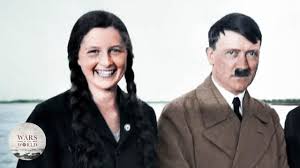
Hansen gives us Rudolph Hess, Jospeh Göbbles, Hermann Göring, and others, all mesmerised by Hitler’s charismatic personality. ‘Charisma’ is a tried and trite word these days, and I try never to use it, yet there is no doubt it applied here. Hess and the others simply melt in Hitler’s presence, losing their wills and personalities.
The same for the thousands in the audiences of his harangues, though at a greater distance, they too are also compelled, lifted out of themselves by his oratory. Hansen shows all of this, disgusting as it is, to be genuine, authentic. There is no cynical or instrumental calculation to explain their adherence, obedience, and the ensuing terrible deeds.
Long before he became Chancellor this man Hitler had a power over people that was tangible though invisible. There is the mystery at the core that continues to fascinate. After the explanations of time and circumstances are exhausted there is still that element left that defies conventional explanation.
Yes, there were aristocrats, financiers, and industrial barons who thought they could manipulate this rabble rouser to combat the menace of communism, and then discard him, but they, too, as they drew nearer to him soon enough willingly submitted to his will. Scenes in which Hitler seems almost by intention to turn on his magnetic gaze — think Superman engaging his X-Ray vision — and bring to heel a millionaire, a full general, an heiress, a professor, all his intellectual, organisational, and social superiors bowing down to this corporal without an education, a grating Austrian accent, a crude manner, a message dripping with the crudest vitriol is …. astounding. There can be no other explanation but that word ‘charisma.’ As an illustration of that phenomenon the novel is a case study of that C Factor. (Charisma, for those who have not been paying attention.)
In David Fraser’s ‘Knight’s Cross: the Life of Erwin Rommel’ (1994, p. 433) is an occasion when the war in July 1943 is going badly and Rommel had doubts about its conduct which as a good soldier he stifled, is scheduled to go to Berlin. This trip he welcomes because, he said, he would warm himself by the Fuher’s radiance, something like that. It is a wistful, school-girl-with-a-crush kind of remark made by a decent man who knew better and yet he could not help himself. He, like so many others, near or far, was hopelessly and helplessly in love with one Adolph Hitler.
There are many memorable scenes and events. Perhaps the best, for this reader, is the description of one of his early speeches. Hitler is tight as a spring before hand, nervous, angry, best avoided. He has ten pages he takes to the rostrum microphone in the hall with a crowd of three thousand. We later learn that on each pages is a bullet point in 30 words or so to act as a cue. He begins… The tirade mounts, it is becomes ever explicit about what the problem is what is to be done about it, and that Hitler alone sees the problem clearly and is willing to act on it. He rants for more than two hours. The reaction is spontaneous and tumultuous. This is early in his career, there is nothing coerced about the response as would be the case later. He has electrified a nerve shared by members of this crowd – the western nations are eating Germany and Germans alive through their despicable agents – the Jews, Jews and Communist are one and the same, wicked orientals.
After his speech, whisked away to his car where he is seen to be drenched in sweat, reeking of emanations, exhausted, pale, his gaze unfocussed, twitching in throes, as if possessed. This description reminded me of Biblical accounts of John the Baptist channeling God’s will. It nearly killed him, but do it he must. The messianic element is manifest.
Some were resistant to his appeal like Geli herself, and they paid the price, but they seemed ever fewer.
Surprising was the cunning in which at times Hitler suppressed his compulsive urge to preach anti-semitism in an election campaign so as not to frighten off the voters. But by that time, like the racism that inhabits contemporary American politics, it was so well embedded that it need not be said for it was communicated by code. The red star of communism was also the Star of David. To attack communism was implicitly to attack Jews even if they were not specifically mentioned.
False notes, there are a few. The most striking to me was the way Emile at the end seems not to be bothered by Geli’s death.

Minor missteps? I wondered about the reference to a crossword puzzle in 1927 when the first crossword did not appeal in the ‘London Times’ until 1930, and the crossword was an Anglo-American invention. There is also a reference to a zinfandel-coloured carpet. I stopped at this, because the zinfandel grape skin is black and the use of it as a wine grape is American. (Yes, I know it has a long history and has been used in Croatia for centuries, but I doubt a German in 1927 would reach that far for a colour. I also found jarring the reference to kaiser rolls and Ferragamo shoes. The kaiser roll is Austrian and may be named for a baker, not The Kaiser. Ferragamo started making shoes in Florence in 1927 and went bust in 1933, to be reopened in the 1950s, leaving unsure that Geli could buy such shoes in a shop in destitute Munich in 1928.
One contrast to the Hitler, as shown in these pages, is Charles De Gaulle who also felt himself to be the saviour of his country and with a kingsize sense of his own importance as a result, and yet he seems modest, even self-effacing in comparison. I read Jean LeCourture’s multi-volume biography of Le Grand Charles. He did not use up people and then murder them when it was convenient as Hitler often did, like Ernst Röhm among many others, including Geli.