IMDb meta-data is six episodes of 52-minutes each rated 7.0 by 1,500 cinematizens.
Genre: krimi.
DNA: Belgian.
Verdict: Eye candy.
Tagline: More is more!
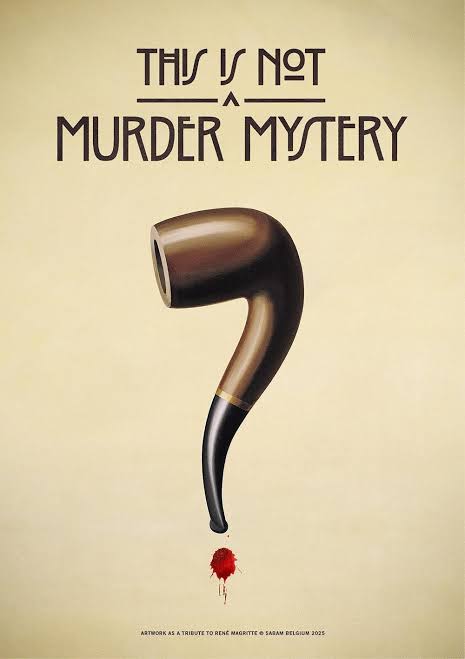
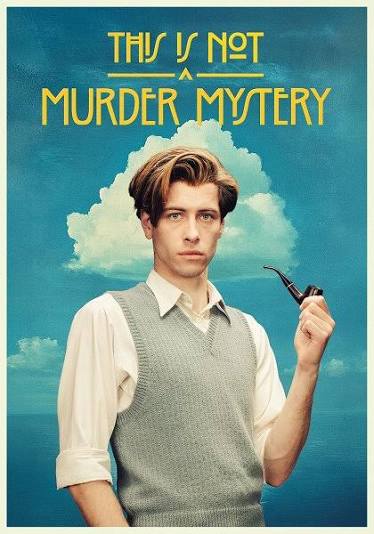
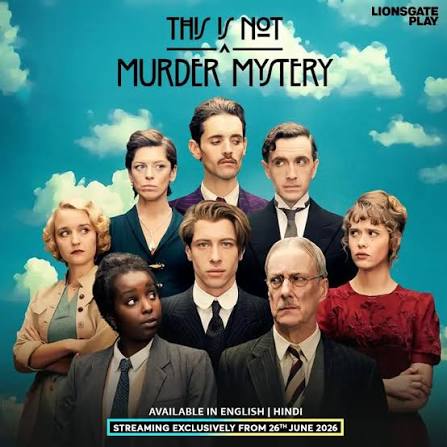
A period drama evocative of Agatha Christie with the time and place but more opulent and bloody than any of the Dame’s tales. A gathering of household names to come of artists – Man Ray, René Magritte, Salvador Dalí, Lee Miller, Max Ernst with their partners – for a SURREAL art extravaganza leads to real murder and mayhem. The artists themselves become the art.
As bizarre as the artists and their art are, colourful as their infighting is, melodramatic as their star-turns are, the lavish setting steals the show. When the murders start, plod arrives from Ballykissangel (1996-1998) and sets to work.
Young Flemish Magritte (with a Walloon name) feels like an outsider and noses around. The others seem largely unaffected by the murders, or that could just be bad acting and hopeless direction. Even more bizarre turns and twists follow.
The star of the show is the setting in Art Deco mansion. I said ‘eye candy’ above but perhaps I should have said ‘eye caviar’ or ‘eye foie gras.’ Very rich.
The production confirms to current standards and is colour blind, unlike the 1930s and also seems to be gender blind. I found that distracting each time, but so be it.
IMDB meta-data is a run time of 1hr and 43m, rated 5.6 by 378 cinematizens
Genre: SciFi.
DNA: New Mexico.
Verdict: Engaging.
Tagline: Where is my bibelot?
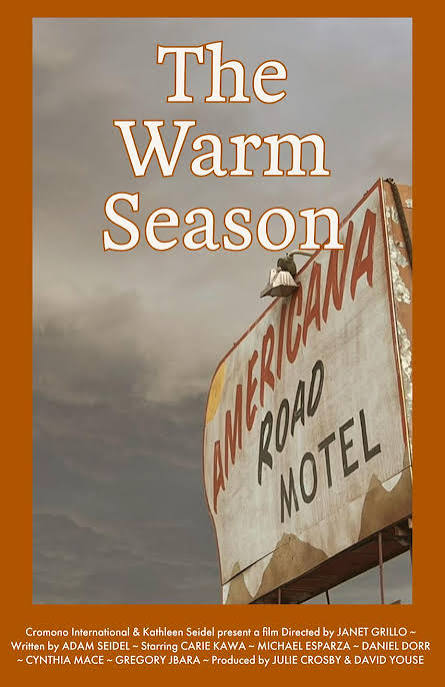
She has a loving husband and cares for an aging mother who makes few demands. Then Mann appears. Well, he re-appears. He is calm, quiet, and persistent. He cannot be what he appears to be since, when our heroine takes pictures of him, he’s not there! Photoshopped out before he was ever in. So maybe he is what he says he is. From the past, and from…elsewhere.
Mann first appeared to her twenty-five years before when she was but a sapling and now he’s back. Largely silent, totally enigmatic, but real outside the camera lens.
Yes there are men in black with wraparound sunglasses at midnight wearing highly polished shoes. Why do cinematographers like shots of feet anyway. Is this a Masonic fetish? An alien signal? Or just stupidity? The last seems the best choice, given the blind imitation of so many filmmakers. Monkey see, monkey do, sums them up. Seeing feet in another movie, the imitation starts and continues.
Cast and crew.
One of those men in black came back, too, twenty-five years later (and just about steals the show), but with neither the shades nor the shoes.
It is carried by the woman in the lead and she does that with energy, enthusiasm, and intelligence.
IMDb meta-data is 24 episodes of 60 minutes rated 7.3 by 950 cinematizens.
Genre: krimi.
DNA: Schweizerdeutsch.
Verdict: More.
Tagline: Full circle.
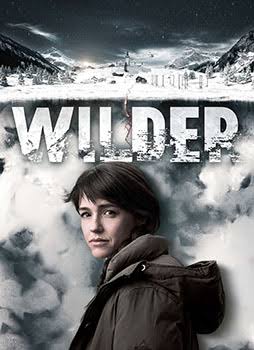
A picturesque winter valley in the Bernese Alps holds many secrets in its small, enclosed community of Oberwies, never to be confused with Unterwies. We watched Season One’s six episodes following a single story arc that came full circle. Despite its total length there is no padding. Everything you see fits into the plot, including the very mountains themselves, which – as one character says – are a cage trapping those within. If you pay attention it will pay off.
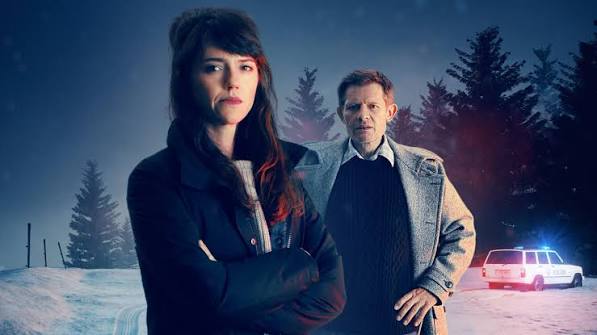
While in outline the story is a tired old chestnut in this reworking it is fresh and engaging. The eponymous police officer returns home for a visit to find strange things and teams up, reluctantly, with another officer who is on a personal quest, into an odd couple. They deal with a manipulative superior and closed-mouth witnesses. But the twists and turns are fresh and the acting by one and all is superb. Everyone down to the cook in the cafe with half a dozen lines lives the part, not something I can say about much of what I watch when I have the feeling the player is playing, not living.
Oh, and we particularly enjoyed seeing the ever so cynical private eye Philip Maloney in a new incarnation.
We intend to follow up with the next season (there are four six-episode seasons), but first need some respite from this Swiss climatic melancholy and psychological intensity.
The scenery is a long way from Newtown but it reminded me of the year I spend in Logan Canyon surrounded by the Wasatch Mountains.
I came across it on TV5Monde+ and watched the first episode then I discovered it on SBS On Demand and continued there. While there are no commercials on TV5Monde+, transmission can be erratic so I bore the cretinous commercials on SBS for the convenience of a smooth screening.
IMDb meta-data is a runtime of 2h and 18m, rated 7.1 by 672,000 cinematizens.
Genre: Dramedy.
DNA: Hollywood.
Verdict: Reality.
Tagline: A comedy about the end of the world.
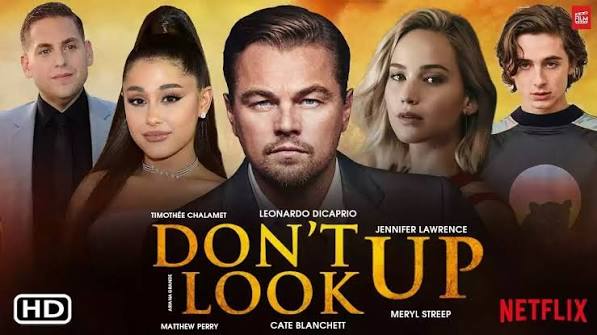
The snobbery begins with the IMDb summary that reads ‘Two low level astronomers….’ discover the planet-killing asteroid is on course for the apocalypse. The unmistakable implication is that had they been higher level, i.e., from Cal Tech or Harvard rather than Michigan State, things might have been different.
What follows is a two lane satire, the first about the US media and the second about public opinion. Everything becomes a matter of opinion, and facts have no weight in this domain.
There are no votes (or graft) in death, accordingly no one in Washington wants to hear the news of the low-level astronomers. Desperate, they go to the media, where the cannibals descend on them for a repast. Both the sensation hungry media and the public it has trained to salivate are more interested in the coupling of the couple de jour than the coming disaster.
The Impact Deniers gain sway. Who wants that much bad news anyway? Although a business man sees profit in catastrophe and sets out to harvest it.
It is all a metaphor for climate change of course, but the hand is so heavy it becomes boring and predicable. Cutting 45m (all of the Musk clone) would have sharpened the stick. The star power of the mismatched leads cannot save it from the mute button. But I would welcome a President Streep especially since she forgets her own son in a crisis.
The last comedy about the end of the world I saw was Moon Man (2022) from China. It is discussed elsewhere on the blog. Click on for a comparison. i know which was more fun to watch, and less predictable.
IMDb meta-data is runtime of 1h and 54m rated 6.4 by 8,400 cinemtizens.
Genre: Sci Fi.
DNA: Sweden.
Verdict: Diverting.
Tagline: The worm (hole) turned.
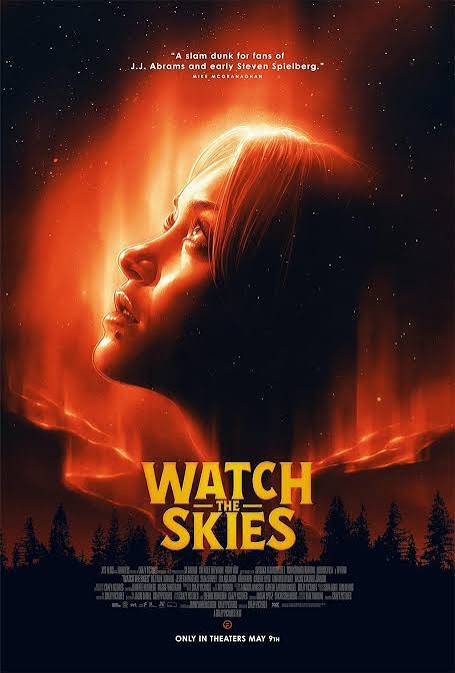
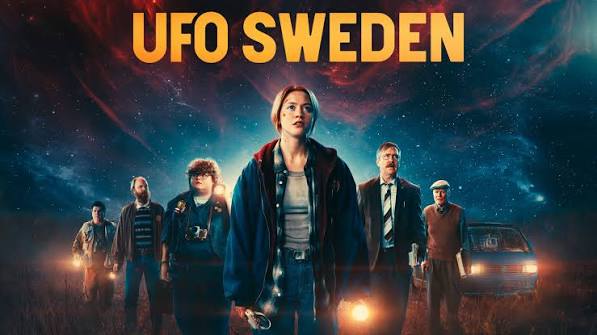
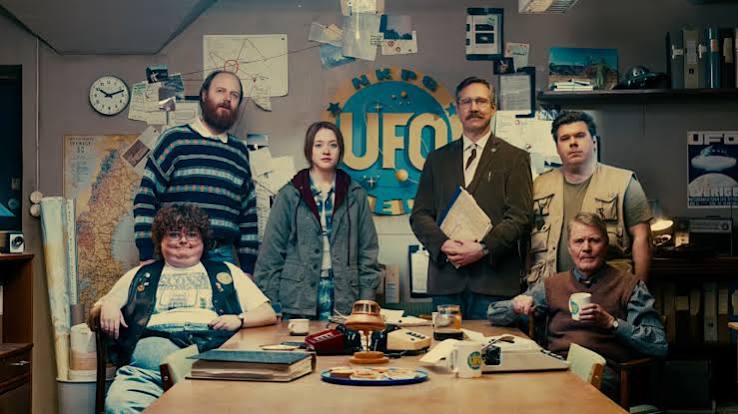
After her father disappears in the north woods one night UFO chasing, a young girl becomes obsessed with finding him. (There is neither wife nor mother in evidence.) In so doing she teams up with a group of misfit UFOlogists.
Her determination to do something — anything! everything! right now! — to find dad brings tensions to the group which has functioned more as a sheltered workshop for its members than an investigative project. Apple carts go flying. The weather and the bureau of meteorology figure in the story.
It all hinges on the adolescent lead who carries the picture. She is not in every scene but when she is there is an energy and urgency.
There are many chases, usually the police interfering with their illegal activities to secure data. Action fans will be satisfied. Me, not so much.
Quadruple ending as if the writer/director couldn’t let go made it far too long. Alain Resnais once said something like if you can’t tell a story in 90 minutes, you don’t know what story you are telling.
About the plot: Was the weather bureau involved in some kind of conspiracy? Why was the meteorologist a crucial character and then dropped? Apart from his lugubrious name what was Jonah (Gunner) doing? Does a patrol officer have that much authority? After the journey why didn’t daddy’s girl follow him? Pick, pick, pick, I know.
I enjoyed it. Enuf said.
***
The supercilious and condescending review on the Ebert platform is, well, not something the dean himself would have condoned. Too many reviewers are so jaded they can’t see what it in front of them. I admit this review was intelligible, unlike many I have read in the name of Ebert which are incoherent, written to show peers how clever they are, not to inform movie viewers but reviews are supposed to be for viewers.
Swedish made but spoken in English for the international market. So I thought. Turns out to be more complicated. It was made in Swedish and then Ai dubbed with Swedish accents and edited with lip sync to correspond. Had me fooled. Seeing is no longer believing. If ever it was.
By the way, pay attention to the ear tag on that cow. Like the title, it is part of the tribute to the genre. The title? Oh, those are the last words of The Thing (1951) one of the best Sci Fi movies. The number? Well those that know know….
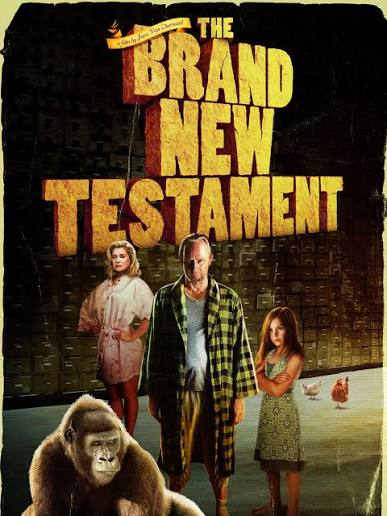
IMDb meta-data is a runtime of 1h and 54m rated 7.1 by 31,066 cinematizens.
DNA: Belgian.
Genre: Comedy; Species: Black, very.
Verdict: Big heart; bigger imagination.
Tagline: What a bastard!
Something to offend all the many self-righteous: blasphemy, cruelty, bestiality, profanity, pornography, prostitution, and more. The surprises just kept coming.
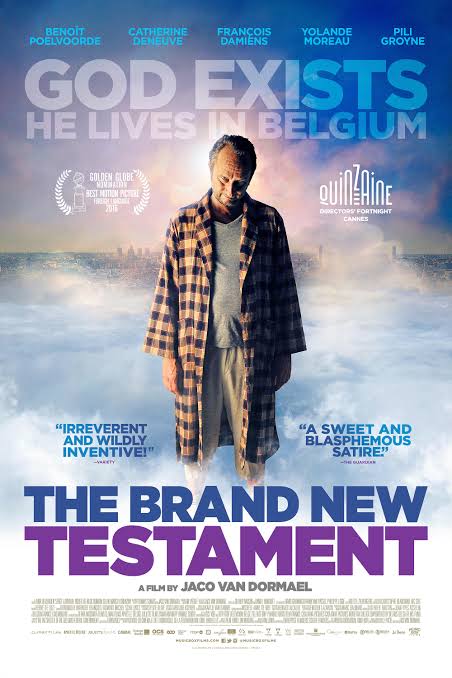
The reality is that God continues to lay down the law from a slovenly apartment in Brussels that he never leaves. Each new law is even more petty, spiteful, and meaner than the preceding 2,507 ones. He is a right bastard, dyspeptic, short-tempered, mangy, unwashed, odiferous, and selfish, a being who delights in the misfortunes of people. He embodies pride, greed, gluttony, wrath, sloth, the whole seven and more all rolled into one.
He is, indeed, old school, Old Testament in worn carpet slippers and a torn bathrobe with a grey singlet that might have been white, once, long ago in B.C.
His son, JC, rebelled against the old bastard, and that provoked God to even more meanness, starting with abandoning his only son. It has been downhill since, as he lays down one law after another, e.g., a dropped piece of toast always lands buttered side down! The other line always moves faster than yours with a corollary that if you can change lines, the new one stops. Remember Law 2003? The freeze in your computer does not occur when the technician logs in with Team Viewer. The last bus left just as you arrived at the stop. No problem is too small for this god to take the time to make it worse. After all, he has eternity to make everyone’s life miserable.
Turns out, Murphy was right, far more right than she realised. It has all been part of the masterplan.
Now JC’s little sister has had enough and…she sets out to recruit more apostles to write a brand new testament. This sprite begins by leaking divine data before going on a quest to recruit six new apostles to achieve a balance. Meanwhile, she is pursued by her angry old man, that is, god to you, but since he has never been out of the apartment in the world before, he is not very good at it, and he keeps running into the consequences of the very laws he has promulgated.
Charming, amusing, surprising, insightful – these are the words that come to mind. There are loose ends, e.g., what happened to the tears she collected? Why is eighteen the right number? What does baseball (in Belgium?) have to do with it, anyway?
I came across it on TV5Monde+ and the irreverent summary was interesting as was the presence of Catherine Deneuve who at age 74 has more screen presence than most at 24. Her last credit on the IMDB of 150 films is dated 2026 so at 80 she is still trouping 0n. Her first credit was 1957. Every time I see her I think of Repulsion (1965).
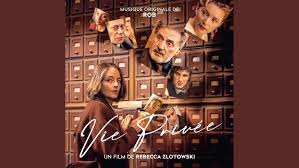
IMDb meta-data is 1h and 47m, rated 6.0 by 4,500 cinemtaizens.
Genre: krimi.
DNA: France.
Verdict: Incoherent.
Tagline: Meh.
This is the IMDB summary: ‘The renowned psychiatrist Lilian Steiner mounts a private investigation into the death of one of her patients, whom she is convinced has been murdered.’
The local advertising labeled it a mystery comedy. Such was the bait.
The laughs, if there were any, were on me because the switch was immediate into stylish incoherence.
There was too little and too much of everything, and a last act in which new information is used to explain the previous one and half hours by introducing a new character. Aristotle neither nor Knox would approve. All that went before proves to be irrelevant, the cigarette smoking man, the constant rain, the hypnotist, the pregnant daughter, the Nazi son, the walking backwards in Central Park clip, and so on. If you were paying attention to all those clues, you wasted your time. I know I did.
I went to be amused, entertained, informed, or diverted and I wasn’t. More fool me.
It was so convoluted at end I am not sure what happened or why. But I know I don’t care. No, I don’t know what the title has to do with anything. But I did wonder how a psychiatrist could get to be renown. Isn’t their work supposed to be private, very. I concluded that the copywriter did not know what the word means.
I did re-new my celluloid acquaintance with Daniel Auteil whom I haven’t seen in years. I also savoured the brief look into the Bibliothèque Mazarine which I used to walk by in my Sorbonne days. I don’t think I ever dared enter. It is based on the eponymous 17th Century Cardinal’s collection. He was chief minister to Louis XIV for twenty years. It is the oldest public library in France.
We saw the movie at the Dendy Newtown Theatre 5 row G 9 and 10 seats. N.B. entry is from the front and upstairs to seats. There is only one aisle on the left (is that permitted by fire regulations?) facing the screen, or on the right as one enters. Aisles seats are 1 and 2 and midway would be best another time. I’ve been caught on this lack of a second aisle and front entry before. Now I have a second time maybe I will avoid it next time.
An Iliad by Liza (Lisa, sometimes) Peterson and Denis O’Hare at the Wharf Theatre (Available in book form of 96 pages (2014).
Medium: Live theatre.
Genre: Epic réchauffé.
DNA: Greek and Us.
Verdict: Exhausting to watch, and worth it.
Tagline: The war goes on, and on….
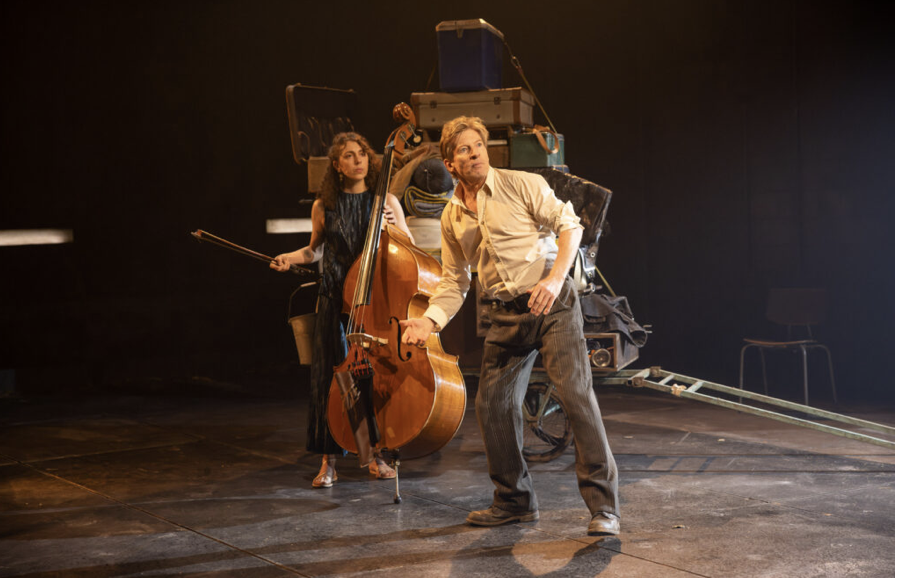
A one man monologue with Helen Svoboda’s double bass accompaniment. Those that claim to know say it would take more than twenty hours to recite all 15,000 drum-beat lines of dactylic hexameter. Ergo in a presentation just under two hours, most is omitted.
Aside from orientation, it concentrates on a few set pieces like the withdrawal of Achilles, the rejection of Agamemnon’s ransom, Patroclus misadventure, the death of Hector, and Priam’s supplication.
Greek though Homer was, the most sympathetic characters that he draws are the Asians: Hector, a man of responsibility, with his stoical wife Andromache and Priam, a loving father to his sons and to his people. In contrast the Greek Achilles never feels responsible to or for others and Agamemnon is more interested in himself than even his daughter Iphigenia. (If you know, you know. If not, find out.)
I particularly liked the inclusion of Achilles’ admission that he loves Briseis, which was omitted in the twelve lectures on the Iliad we watched on The Great Courses as homework for this show.
The historical and topical references were effective.
It is derived from the Robert Fagles translation, though I prefer Richard Lattimore in which Helen is treated as a plaything of fate, and not a villain. Indeed, in the Iliad there are no villains. That is the tragedy. See the P.S. below on translating the Odyssey.
Omitted from this script is one of the passages that seldom gets its due: the discussion between Sarpedon and Glaucus. They have come from far away as allies to the Trojans, and when the going gets tough they wonder why they are there at all. Their conclusion is a proto-social contract.
Our people have treated us like leaders with respect, deference, and material advantage, so we are obliged to act like leaders and uphold this alliance which benefits our people. Moreover, in so doing we show our worth to our compatriots. After all, what does it matter? We will die sometime, someplace, so it might as well be here and now to repay our obligations.
Glaucus replies, To the gods we are nothing more than falling leaves on the autumnal wind.
Quite so, yet when Sarpedon dies, Zeus weeps tears of blood on the sandy plain before Troy. Not even this god of gods can dam the river of mortality. Petrichor, the blood on stone scent of rain, the term was inspired by this passage: Petr = stone; ichor = blood.
***
David Wenham, 61, has come a long way from Diver Dan. This was a tour de force relying entirely on the actor, though there was a surprise when a hand first plucked the bass.
It was a Sydney Theatre Company production with brilliant, spare staging and direction that is the norm at the Wharf 1 Theatre which is on Wharf 4-5, and not on Pier 1 as we discovered by trudging around on a fine, sunny autumnal afternoon. Seats B1 and B2 suited us very well if and when we return.
We should lunch at the end restaurant some sunny day.
Inspired me to re-read something I published about Hector in a classics journal a few years ago, well, 1983. Perhaps I am older and wiser enough to rework this. Nope.
P.S. Thinking of those two translations remind me of the week long ago in an undergraduate class with Dr Sarah Jane Gardner when we pondered the fifth word of the Odyssey with which the man himself is introduced: πολύτροπον. Transliterated that is, polytropon. ‘Poly’ means many or much. ‘Tropos’ means turn, way, manner. Ergo it can be translated as ‘many-turning.’ And therein lies the rub.
Is Odysseus many-turning, or is he many-turned? Does he twrst and turn, or do the fates twist and turn him? Is he active or passive? A does or a victim? Is he cunning or is he vulnerable?
The translations on my shelf vary. Here is a selection.
Emily Wilson – ‘complicated’
Robert Fagles – ‘the man of twists and turns’
Robert Fitzgerald – ‘skilled in all ways of contending’
Richard Lattimore – ‘the man of many ways’
But the prize must go to Thomas Hobbes in 1647 who opted out of the problem said – ‘the man.’ Hobbes always cuts to the chase even more concisely than Wilson.
By the way, Odyssey is both turned and turning.
Of course, Odysseus is both a twister and a twistee.
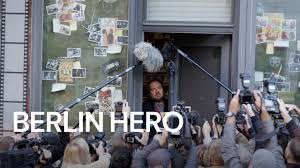
Berlin Hero (2025) Der Held vom Bahnhof Friedrichstasse
IMDb meta-data is 1h and 52 m, rated 6.3 by 389 cinematizens.
Genre: Satire.
DNA: Deutschland.
Verdict: All too true.
Tagline: Believe it or not!
Bear runs a bankrupt video store in Berlin of 2020. It is more like a derelict museum than a business. When a cheque-book journalist in search of a story offers him Euros to tell his tale, he obliges for the geld. Since there was no story to tell he makes one up to jack up the price. He is surprised when that works, but Euros are Euros.
Once the lie is out there, it takes on a life of its own, and then it takes over his life. It cannot be un-lied for now he has something to lose – money and respect.
He may have been unhappy in his squalid store before the journalist disturbed the cobwebs, but now he is miserable, living and lying up to the expectations his story has ignited. The Euros are important but it isn’t just them. The respect, the civility, the admiration that the lie has brought him, starting with own adult daughter, are heady and addictive.
The fact that it is all lies does not phase the journalist at all who is eager to keep riding the wave as long as it lasts, and later when it does crash, he switches to another without missing a beat. He is an accomplished lie surfer.
Some comments on the IMDb suggest it is unrealistic. Oh hum. Watch Fox News for five minutes. Lies are swallowed whole everyday.
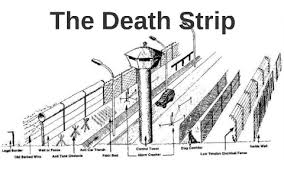
I enjoyed seeing some Berlin sites, though most of filming was done in Leipzig, including the Friedrichstasse station which when I went through it in 1994 still bore the marks of East Germany with a kind of internal Berlin Wall. I also noticed the chain link fence with the posters of the Wall martyrs on it. When I examined it in 1994 the last one to be killed in the Death Zone was a 25-year-old student two weeks before the Wall fell. Several hundred were killed in the Death Strip. Regrettably most of my photographs from that visit got lost somewhere along the way.
The Bear is played beautifully on this emotional roller coaster.
But the best line is dipped in acid when the retired, reptilian, repugnant, and rapacious Stasi officer says, ‘The mother of fools is always pregnant.’ It is from an Italian proverb: ‘La mamma dei cretini è sempre incinta.’ Ergo in German: ‘Die Mutter der Idioten ist immer schwanger.’ Words to live by these days.
The director died before the final shoot and the editing, and it was finished by another with some re-shooting to patch it up. That may explain why the reconciliation in the lavatory seemed too quick and easy. Time to get it done and out the door.
IMDb meta-data is a runtime of 1h and 41m, rated 5.4 by 115 cinematizens.
Genre: Satire; Species: dramedy.
DNA: Czech.
Verdict: [Gasp!]
Tagline: The story must go on…and on.
Czech Radio correspondent from a civil war in the Middle East makes a surprise return to his home in Prague, fearing his wife’s infidelity during his long absence. She, too, is a journalist at Czech Radio.
His fevered imagination misinterprets everything and he goes ballistic, confirming his worst fears, but he has to keep up the pretence of reporting on the spot from a state of emergency in Arabia. Ingenuity and laughs follow, as does his wife’s incredulity, exasperation, (im)patience, and then enthusiasm for the project. The deception is a circle as the television news plagiarises the radio news which plagiarises the news services and the television which plagiarises both. And repeat.
Some of the humour is adult, and there is some gratuitous violence at the end, but the result is upbeat. If you have seen His Girl Friday (1940) you get the idea, and if you haven’t: why not?
There is side story with a school teacher about disinformation that seemed tacked on and not integrated, and the final shootout started as farce and ends up with cadavers.
Most of this dramedy takes places in the apartment so there was no Prague travelogue to remind us of our visit there.
***
Speaking of patience, mine was stretched. This was the finale of the Czech & Slovak film festival at the local Dendy, it began an hour late while we sheep sat and waited. Grumble, grumble.