She, robot!

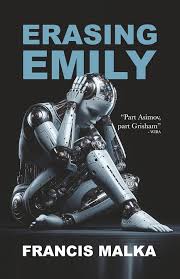
Francis Malka, Erasing Emily (2025)

Good Reads meta-data is 292 pages, rated 4.29 by 24 litizens.

Genre: Sy Fy.

DNA: AI

Verdict: It’s all in the title. 

Tagline: She did it!

A parable about identity.  

In a university library a man gropes a … robot, and it whacks him.  This robot is the titular Emily. Oops!  All of this is apparent from the security video of the incident.  ‘Robot strikes man!’ screamed the ABC News bulletin, and not ‘Man molests robot.’ 

I know Frat boys are hard on and up most of the time but groping a metallic androgynous robot seems desperate even for one of them. How did he even know in the silence of the reading room it was a she, Emily? So what’s with groper? Near sighted as well as desperate? Does this make sense? Read on.

In this fictional world there are tens of millions of 1.0 robots that look and act like robots. Think Robbie’s descendants and you’ve got them. Now Apple has introduced 2.0 robots that still look like robots, but with integrated A.I. that allows for these model 2.0s to learn and develop. These 2.0 Robbie’s have been to school! One of those, as it turns out, is the aforementioned Emily.  

Whatever!  

It is a violation for a robot, however provoked, and what is so provocative about steel being touched anyway, to harm a human. Lawgiver Asimov made that the first precept. The penalty is to erase the robot’s memory, the personality, and reprogram the shell. Goodbye, Emily. To avoid this fate perpetrator Emily goes on the run. It seems AI has a selfish gene that wants to survive. (This app insisted on a capital after the period I put after the I in AI. The only way to get into lower case was to omit the period. Is this another example of the rule of A.I.)

Meanwhile, the McKinsey management of Apple is frantic to shift the blame for this malfunction on to… anyone else. Blame-shifting is a required minor in all accredited business degrees. But first the fugitive bot must be found.  Both missions –  shifting the blame and finding the runaway ‘bot — are landed on the design engineer of model 2.0.  Though his expertise plays no role in what follows. 

Engineer’s head is spinning with the unexpected, unwelcome, and upsetting news that a 2.0 has harmed a human being; he is nonplussed. Moreover, it is abundantly clear that if he cannot find the missing ‘bot, whom we know as Emily, and find out what permitted the Em to strike the man, Engineer will (1) be fired, (2) become a pariah, (3) and be arrested as complicit in the offence. And (4) he will be required to watch endless speeches from that idiot whose name shall never cross my keyboard.   

Meanwhile, the free press beats the story to death with the sense of proportion and social responsibility we now expect: none.  Pitchforks in hand, brandishing torches vigilantes turn on robots. Just for fun Pox News stokes the fire by calling them socialist robots! (Makes as much sense as anything else on Pox News.

If you were a runaway robot, where would you hide?  Yep. Right. Where there a lot of other robots, because, well, they all look alike.  

Now we take a sharp turn away from the mystery of finding the rogue to discover that all of this is only preliminary.   

What follows is a court case to decide what a person is, and whether Emily has the rights of a person. Is she the Rosa Parks of metallic A.I.?  A non-person who might be gavelled into being one by a judicial ruling?  Discussing these points occupies more than half the book.

But wait! 

Enter Perry Mason!

If Em goes to trial it would have to be a jury of peers.  Yes?  But she has no peers.  She is no Shylock – neither tickled nor bled.  There is nothing about this obvious point in the book  but it came to my mind.  Why isn’t the jury made up of robots?  Good question, Mortimer.  Collect the law degree on the way out.

Nor did I fathom why Engineer showed zero interest in Emily’s library assault.  Indeed why was Em sitting in the library? One of the best ways to find out something is to ask. Why didn’t he? The voltes faces of first the lawyer and then the judge were too easy. However I did like the shelter for unwanted bots.  

Here’s a new twist for me.  I finished the book, and when I did a message arrived on the Kindle screen telling me there was an additional chapter if I wanted to read it.  Big decision, right.  I read it. How does that work in the printed book?

It resolves into a take on the Isaac Asimov story ‘Evidence’ (1954) for the cognoscenti that is a spoiler.  In this context it undermines just about the whole book. 
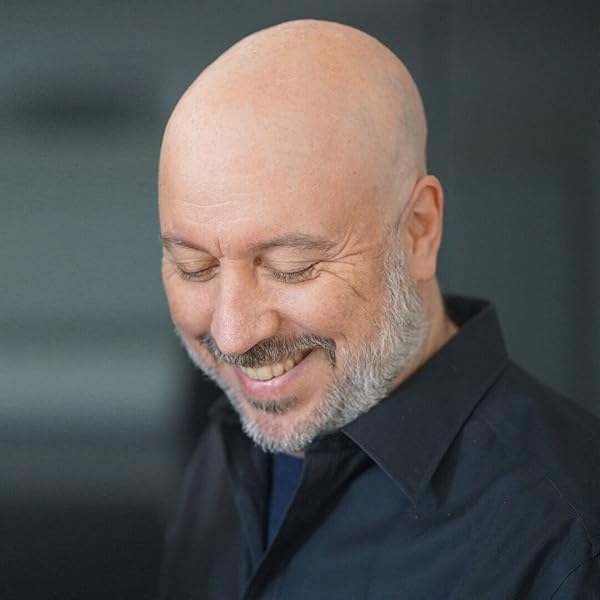
Francis Malka

Not sure what to make of the idea of two endings.  Seems the author should decide on one, not me. 

Quibbling aside, it is an inventive book that kept me reading.  
I knew it!

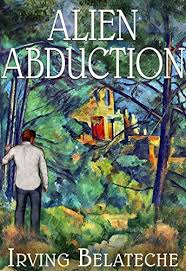
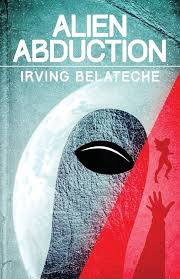
Irving Belateche, Alien Abduction (2016).

Good Reads meta-data is 437 pages rated 4.01 by 242 litizens.

Genre: SyFy.

DNA: SoCal.

Tagline: Cyclopes.

Verdict: Less than meets the eye.

A creative take on the evergreen trope of alien abduction that I had first thought was to be played for laughs. Nope. Indeed that trope was buried in a soap opera family drama: husband loses his job, wife has cancer, truculent teenage children rebel, mortgage payments overdue, and so on, and on. Had they a dog, it would have turned rabid or something. 

I didn’t turn the pages for that, but in a page count it is bulk of the book.

Oh, the A2 is there and it is well told and in a novel way.  No spoiler on that except to say it confirms a nostrum of SyFyism, the aliens want our women!

There is a lot to like: Some insights into the changing world of journalism, basics of composition, DNA testing technicalities, characterisations, the to’ing and fro’ing in the urban agglomeration of Los Angeles, the way the writer avoided explanatory details, say about the curvature drive.  Refreshing to read something by author who knows what a topic sentence is.  

Irving Belateche

What I didn’t get is where the cash money came from in $100,000 units, how the drug was marketed, what happened to the boy Mason who so preoccupied Hero’s thoughts and then drops off the page.  Did I blink?

Jay’s at it again.

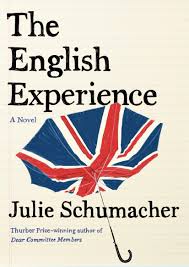
The English Experience (2023) Julie Schumacher

Good Reads meta-data is 230 pages, rated 3.90 by 2481 litizens.  

Genre: Fiction.

DNA: USA.

Verdict: More Jay, please.  

Tagline:  Murphy explains it all. 

The unwilling and unwelcome chair of the English Department of Payne State University, Jay, backs into another unwanted assignment.  He is to escort a dozen Payne undergraduates on a three-week study tour of England.  It’s only three weeks: what can go wrong, so he consoles himself.  

Then the sea of troubles – personal, institutional, and international – strike, one after another. There is no respite. Will Jay never learn?  

One of the students did not read the brochure beyond the word ‘British,’ and thought the tour was to the British Cayman Islands.  Yeah no one else can understand how that worked, but he showed up at the airport in shorts with diving gear for a January trip to London, the one in England.  He now considers suing the University for false advertising.  

Another participant does not like to talk about his sealed police record, and so he brings it up repeatedly.  When, as a result, others begin to avoid him, he expects Jay to overcome this ostracism or he will give him a bad rating.

The identical twins are, well, identical and inseparable, though separate.  Jay can’t tell them apart, and he gradually realizes they, being well aware of that, exploit it to confuse him further, albeit he starts pretty confused.

Then there is DB who apparently missed the flight and yet appeared, briefly, at the London residence, only to disappear again.  Oh, and no one knows what ‘DB’ stands for.

Another student has never before been away from home, and her cat, and pines for the latter every minute. She believes in sharing this pining with Jay.  

Then there is Boadicea who approaches everything as Armageddon. She categorically refuses to comply with any of Jay’s few and lax requirements mainly because ‘all requirements are gendered.’  Patriarchy must be denied!  

But the peculiarities of these students pales into insignificance when the remainder of the party is considered.  

Although the dozen students all signed up for the excursion and paid for it, none of them intend to follow the prescribed program, still less write the reports Jay set, and that is fine since he had little interest in reading them.  Every step of the way it is a test of wills, and at sixty years of age Jay’s will has been eroded by the tests that have gone before it.  Most recently with the Provost to get a budget for his department, which has been on death row for some time. Few of its members will survive the killing fields of the next budget round.  But like deer in hunting season, most of his colleagues are unaware of the calendar. He hopes, no doubt vainly, that taking this assignment will earn his department a stay of execution for another budget cycle. Rumour has it that the Provost has negotiated a new contract with a salary greater than the combined salaries of all sixteen members of the English Department. Hmmm.    

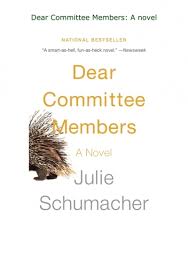
If you don’t know Jay, start with Dear Committee Member, the first of the three novels chronicling his woes. Then continue with the Shakespeare Requirement, before getting to this one.  

Some readers of these books might think them satirical, but I can assure such readers that they have a core of verisimilitude.  This conclusion is contrary to some of the more sanctimonious reviews on Good Reads.  

I gulped this one down in a day and a night.  

Hell, yes!

The Divine Comedy by Dante

Good Reads meta-data is a listening time of 17h and 3m, rated 4.4 out of 5 by 18 audiblistas.


I read the Inferno, Part I of the Commedia, as an undergraduate and it made an impression on me. One for Dr Sarah Gardner. But I aways wondered about the remaining two parts. I finally scratched that itch by listening to an Audible version of the whole over the last few weeks on daily patrols of Newtown.  


Hmmm….  I found Purgatory boring, all too much like listening to conference presentations: one after another, each successive one less interesting than the one before. 


However, it proved more bearable than Paradise which was so saccharine that I gave up on it with more than two hours of empty rhetorical calories to follow.  


Conclusion?  Machiavelli was right, the people in Hell are more interesting than those in Heaven.  He wrote something like this: In hell I shall enjoy the company of popes, kings and princes, while in heaven are only beggars, monks and apostles. Certainly Dante’s Hell is far more entertaining than his Purgatory or Paradise.  


Further reading: Maurice Joly, The Dialogue in Hell between Machiavelli and Montesquieu (1864) adds to the fun. See also Sebastien de Grazia, Machiavelli in Hell (1989), sanctimonious though it is.  But first try Machiavelli’s own short story, Belfagor.  


Fear itself.

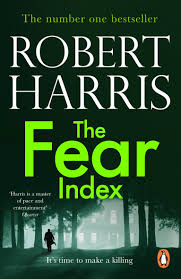
The Fear Index (2011) by Robert Harris

Good Reads meta-data is 323 pages, rated 3.55 by 16,526 litizens.


Genre: Thriller diller.


DNA: Switzerland.


Verdict: Gulp!  


Tagline:  The AI did it!  


It all began when Rich Brain received a book fin the mail, a first edition of Chuck Darwin’s Origin of Species. Nice. It will add to his collection of first editions that he never looks at among the other luxury goods stuffed into his vast Geneva mansion. (Thereafter passages from Darwin are chapter epigrams. Neat.)  


Trouble is, who would give churlish, reclusive Rich Brain anything?  He rings up the seller at 2 am, because he is Rich Brain and time means nothing to this titan, to ask who bought the book. The groggy seller says, ‘You did.’  Huh!  That threw Big Brain but Seller read out the details, including the bank account, which is later checked and found to be one of his many stashes, this one is not in a Cayman Islands tax shelter. The mystery begins!


(I have occasionally received a book delivered in the mail and forgotten both that I ordered it and why I wanted it. But I knew who to blame.  The dog!)  


Rich Brain is a mathematical genius, just ask him. Wait! Don’t he will simply sneer at you for asking about the obvious. While Brain disdains money, he disdains even more those without it. He seems to characterise those around him from the outside in. Think Jay Gatsby. A man wearing a cheap suit must be a cheap (= stupid) man, and so on, thus reasons this Croesus.  Although it is true that he disdains just about everyone else, too. He is an equal opportunity despiser of one and all.  


This genius has devised an Artificial Intelligence program, call it Vix, capable of learning to trade stocks and he has been minting money from it.  Trades of a billion US dollars is all in a day’s work.  Overnight he makes millions, each and every night. Oh hum. 


Well the Darwin book is one thing but an intruder into his fortress home who seems to have walked in through the front door, politely leaving his shoes at the mat, despite the Maginot Line security, is quite another. The plot thickens. In what follows there is much to’ing and fro’ing in Geneva that I liked. I spent a day there once including a homage to Rousseau.  


He is now caught between two men in cheap suits, a weary police officer and the intruder. Though his coincidental sightings of the later stretch credulity.


Is Rich Brain having a schizophrenic nervous breakdown? Is someone out to get him? Are both true, or neither?  He goes off the rails, but was he pushed or did he jump? Then again, he was never quite on the rails to begin with. Meanwhile, what is Vix doing?  Well quite a lot, and that is scary, too. I thought of the Forbin Project (1970). Reviewed elsewhere on the Blog.


Vix is determined to survive per Darwin.


Great ride; no finish.  Why did Vix gaslight Brain (book) and then try to get him killed (intruder)?  Was it an Oedipus complex? Will Brain be tried for murdering the German?  Does Vix have yet a third location?  Why did Gabby latch onto Brain in the first place, and second why did she stick with him?  Will Inspector Weary make it to retirement?  


P.S. I classed it as a ‘thriller’ above but it is not written in the frenetic, confused, jump-cut style which leaves it to the reader to fit the jigsaw puzzle of words together. A mercy that.   


Contact!

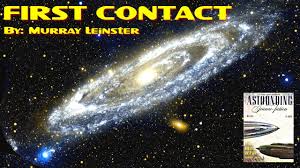
First Contact (1945) by Murray Leinster

Good Reads meta-data is 25 pages rated 3.95 by 213 litizens. 

Genre: SciFi; Species: First Contact.

DNA: USA

Verdict:  A landmark. 

Tagline: Mirror, mirror.

Interstellar space flight is routine, and Earth ship Llanvabon is on a research mission to study a double star in the Crab Nebula. This is such an unusual astronomical opportunity that, whoa, it has attracted another, alien ship.  

First problem is to identify it.  Definitely not from Earth. Yikes! Aliens. This is the first contact of any kind with an alien species after decades of interstellar flight.

Second problem how to establish peaceful contact. Many tentative steps are taken by each side. 

Third, now that rapprochement seems to have been established the next problem to solve is how to communicate.  Fortunately, Ensign Apple whipped up a translator app on his iPhone.  [Sure he did.]

Fourth, the aliens are humanoid in the same way MAGAs are.  They do not talk but use a radio wave telepathy.  

Fifth, the ships swap two crew members to get acquainted.  Still things are volatile.  Why?  Each ship has armaments intended to blast meteors that they are could use on each other and back track to the home world for invasion!  

Six, it is a stalemate.  Neither captain wants to attack if this is a good opportunity for cooperation, but neither wants to reveal their origin in case the other has hostile intentions. Indeed, they – both captains and both crews – begin to realise they are thinking nearly exactly alike. 

Murray Leinster

Spoiler ahead!

The resolution is to swap ships, each denuded of any revealing information about origins as a kind of technology transfer of good will.  Each leaves for its homeward with alien ship.   

Ripped from today’s headlines!

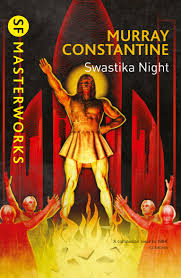
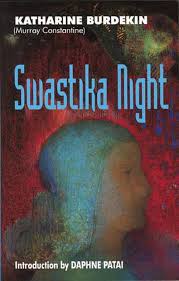
Murray Constantine (Katharine Burdekin) Swastika Night (1937).

Good Reads meta-data is 208 pages rated 3.62 by 2909 litizens.

Genre:  Dystopia.

DNA: Brit.

Verdict: Prescient and timely.

Tagline: ‘I told you so.’ 

Anno Domini 2444, five hundred years after Germany won World War II (yes the author saw that coming when even Charles Lindberg didn’t) together with the Japanese. Hitler has now been deified in gold. Women are herded like cattle and used only for selective breeding. Jews, homosexuals, the Bosox nation, Slavs, Romani, game shows hosts, Jehovah’s Witnesses, Quakers, and other subhumans have been exterminated.  On the other side of the world the Empire of Japan luxuriates in its triumph by pillaging far and wide.  

The demigod Hitler is portrayed as 7’ (2.1m) tall with a strong chin, blond hair, cobalt blue eyes, and dimples. Even better looking than Elvis. 

No books are left to burn, but the thought police remain ever vigilant.  If this is starting to sound like….  

In the novel Hero begins to find out the truth about the war and Hitler and is hunted down by the aforementioned ICE agents and murdered. End of story. Downbeat indeed.  

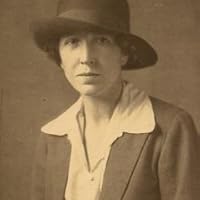
Katharine Burdekin

Irony is that in the free Britain of 1937 the author had to pose as a man to get her book published.  

Further Reading: The Man in the High Castle (1962) by Philip K. Dick with its novel within a novel, which seems mild in comparison. Likewise, Swastika Night makes Handmaiden’s Tale seem like a fairy story. 

Basel in the winter.

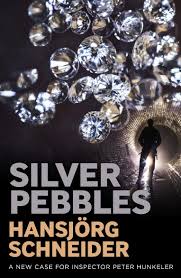
Hansjörg Schneider, Silver Pebbles (1993).

Good Reads meta-data is 183 pages, rated 3.58 by 189 litizens.

Genre: Krimi.

DNA: Swiss.

Verdict:  Bah.

Tagline: Bah!

Liked descriptions of winter weather, city, train station, and the Rhine River…. Also liked the personalities of the supermarket check-out woman and her de facto: She practical and down to earth; He a dreamer who thinks he is smarter than he is. In fact he is almost too dumb to believe.  

Didn’t like Inspector Grump’s constant whining and whingeing, and feeling sorry for himself.  Nor the aggressive verbal relations he applied to his squad members and they reciprocated.  Repetitive blaming all ills and woes on unnamed ‘higher ups.’  I suppose the author thinks that is social criticism, but it is not. It is just lazy carping. He should read some Michel Foucault.  

Very little detecting or police work, and ever more padding about snow, interspersed with Inspector Grumble’s simple-minded monologues on the idiocracy of everyone else in the Ruling Class/Deep State.

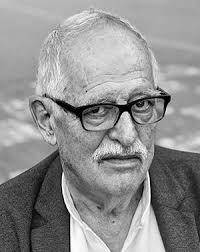
Hansjörg Schneider

The Basel train station has an unusual history in World War II, and that fact always makes me receptive to novels set that city. The station was split, half administered by Nazis and half by Swiss.  I read a thriller that started there, see: https://theory-practice.sydney.edu.au/2021/09/target-switzerland-a-novel-of-political-intrigue-2020-by-william-walker/. I read that earlier book because I had found an intriguing reference to this railway station schizophrenia.  Nothing about that in this pot simmerer which did not reach a boil.  

It’s all lies, and that’s the truth!

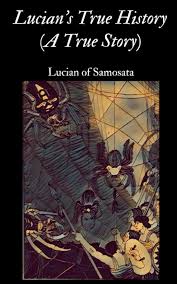
Lucian, A True Story.

Good Reads meta-data is 90 pages, rated 3.5 by 4 litizens.

Genre: Fiction

DNA: Greco-Roman.

Verdict: Fake news.

Tagline: It’s all lies, and that is the truth! 

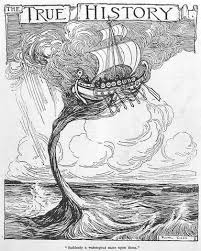
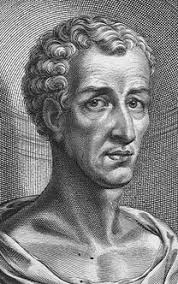
 ‘Call me Luke’ (AD 125-180) was a geographic Syrian and Roman citizen who went west to fame and fortune, first as a visiting professor hither and yon, and then as a celebrity author. He was often ‘in conversation’ with local nobs, engaged in panel discussions, and spruiked his many books at personal appearances. Like most learned Romans of the time he spoke and wrote Greek, the language of international culture, as well as enough Latin to cash his appearance cheques.

Lucian’s story is true in that it is all lies, and he tells us from the get-go. Is he that logician’s specimen come to life, a lying Blackfoot? You be the judge!

In this autobiographical foray Luke takes off, literally, in search of a good time and willing ladies, with fifty other likely lads; together they sail through the pillars of Hercules to wild and woolly adventures on earth, on the sea, on the moon, among the stars, in the belly of 300 kilometre long whale, on an island of tree women, and more.

The sarcasm and satire are piled on. The main targets are earlier tellers of tall tales like Herodotus who reported every rumour as fact in the best tradition of the free press. Lucian outdoes them all in his fantasies. But he is lying as he happily reminds the reader.

He ends by promising a volume two, but that, too, was a lie.

It figures.

Luke

Of course then as now there were Good Readers who thought the lie was itself a lie and believed what he said to be true concealed behind that lie. Straussians avant le mot

I got around to reading it because Thomas More with Desi Erasmus translated it from Greek to Latin, and published it in Florence (1519) in Machiavelli’s lifetime. I began to pick again at the thread that Machiavelli might then have been aware of More because he was a personal friend of the printer. Also because Lucian might have turned More’s mind to Utopia.

Keith Houston, The Book

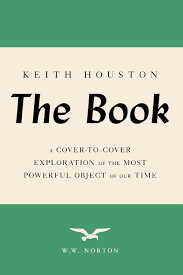
Keith Houston, The Book: A Cover to Cover Exploration of the Most Powerful Object of Our Time (2016).

Good Reads meta-data is 442 pages rated 4.09 by 1161 litizens. 

Genre: History.

DNA: USA.

Verdict: A synthesis. 

Tagline: ‘It takes a strong will to resist the lure of ebooks.’

So many books are about books it is no surprise that there are books about the physical object we call a book: A biography of the book.

What I learned about the evolution of the book was that it is a tale of laborious trial and error by many hands over several millennia to get to the book as we kne/ow it: Paper, ink, fonts, binding. Gutenberg was one of a cavalcade of obsessives who went broke trying to improve book printing.  

Other tidbits include the following: 

Book-locks which I have seen were not parental controls which I had thought but to tighten closed books so that the parchment would not curl.  

The consequences of shelving books on end rather than lying flat were many. See also, Henry Petroski, The Book on the Bookshelf (2000) on this point.

In many cases fonts were named for the first to develop them. From Italy Italic was a reaction to the heavy Gothic type Gutenberg used.

Foolscap paper derived from a watermark left on certain size sheets of paper in England 17th Century after the fall of monarchy.  The crown was replaced by a ‘Fool’s cap’ watermark as sign of loyalty to the new order.

Paper sizes A1 to A10 originated in Germany.  A1= 1/2 a square meter, each subsequent size is a half of its predecessor.  Sizes of paper originated with the reach of workers who made paper.  

  • Georg Christoph Lichtenberg (1786): The initial idea for a proportional paper system came from this German scientist. He proposed a width-to-height ratio of 1:√2, recognizing its mathematical efficiency for scaling. A sheet of paper with this ratio can be folded in half to produce two smaller sheets that have the exact same proportions as the original.
  • Dr. Walter Porstmann (1922): German engineer formalized Lichtenberg’s concept into the DIN 476 standard. This standard set the largest size, A0, to have an area of exactly one square meter, with all other “A” sizes defined by successively halving the larger sheet. Such a progression is called geometric harmony.
  • Codified by International Standard Organisation in 1975.

I also found a clanger when author says Herbert Hoover was Secretary of State in Woodrow Wilson’s cabinet (p 418).  Not only was Hoover not Secretary of State, he was not in cabinet at all, though he certainly worked closely with Wilson’s administration. 

More interesting was James John Audubon:

  • born in Haiti to slave owning family of planers. The family returned to France when the slave revolt stirred. In 1814 family sent teenage James John to Pennsylvania to avoid conscription in Napoleon’s endless wars.
  • He was a boy naturalist, first in Haiti, then France, then USA.
  • Tried to make a living out of his naturalist interest.  Bird book with travels.  No one in USA wanted to publish it.  Took it to London. No. Then Edinburgh where he succeeded.
  • One copy of all ‘textual books’ must be given to British Library.  He only had 200 and was deeply in debt.  Didn’t want to surrender even one copy for nothing.  So extracted text describing locale and birds from the pictures and printed it separately and compared to the illustrated book this textual book sold cheaply and gave that to the BL, but not the picture book.

In medieval Europe mirrors were used by the faithful to reflect divine rays from relics onto pilgrim. A good business for touts outside churches selling mirrors. A proto selfie? 

So many technical details, so many proper names I got lost in the morass.

Remember the Norwegian ‘Medieval helpdesk’ on You Tube?  It is still there. 

Author opens with that tagline above and then says little or nothing about ebooks.  Whoops, no that silent withdrawal of Nineteen Eighty-Four (p 9), though he used the numeric title and not the words. Orwell stipulated words not numbers for the title, but no one listens to authors. Certainly not publishers. 

Keith Houston

Me, I compared the resistance to printed books (leads to atrophy of memory, allows rubbish to be published and read, makes us solitary rather than conversational and convivial, and  class aesthetics because printers were begrimed working class, whereas scribes were learned, devout monks) to current resistance to ebooks (too fiddly, put bookstores out of business, allows a tidal wave of crap, and does not have the aesthetic qualities of a nice book). Certainly right about the crap. I can leave the aesthetics to others. Video dented but did not destroy cinemas and I hope digital books will not destroy bookstores. What has already destroyed far more bookstores were the predatory mega franchise chains like Barnes and Noble, Borders, Smith, Waterstone, and their ilk which set out to do so with pricing and location.