
;

Semicolon: The Past, Present, and Future of a Misunderstood Mark (2019) Cecelia Watson 

Good Reads meta-data is 213 pages rated 3.67 by 2126 litizens.

Genre: non-fiction; species: grammar.

DNA: Pedantry.

Tagline: Is it semicolon or semi-colon? 

Verdict: anti-climactic.

Tagline: Well, someone had to do it. 

‘Class just for fun today let’s review the uses of the semi-colon. There are two principle uses: (1) to join two independent sentences as clauses and (2) in lists where items contain commas, the semi-colon can be used to mark off separate items.’ 

‘There is (3) another less common use for effect to insert a pause shorter than a colon.  If a period is the longest pause of four beats, a colon is three, a semi-colon is two, and a comma is one.’

The effort to make grammar into a science has led to a proliferation of rules so that in the latest edition of that Bible of style, the Chicago Manual (more on this sacred text in a moment), there are now forty-six (46) rules governing the wedding of a dot and squiggle which is neither a period nor a comma but rather their unloved child. This proliferation of rules was ostensibly intended to clarify the use of the semi-colon but has only further shrouded it in mystery.  Try reading these rules and you’ll see what I mean.

Author uses the semi-colon to chart the growth of grammar and its priestly attendants since the Eighteenth Century.  The first English grammar books appeared in England and forced that unruly and irregular mongrel tongue into rules derived from Latin and Greek with parts of speech, clauses, cases, numbers, declensions, gerunds, conjugations, and the like. The rules propounded were policed by grammaristas who bludgeoned those who erred with weighty tomes on grammar seasoned with a superior smirk.

Sidebar: though not explored by the author, I wondered if this migration of grammar from Latin and Greek was one explanation for the long shelf life of those languages in British education.  

By the middle of the Nineteenth Century there are hundreds and hundreds of these rule books on both sides of the Atlantic.  Needless to say they contradicted one another on each side of the sea as well as across it.  However, they did not included punctuation which had roamed free until that time.  

Bringing punctuation into the fray was an innovation that gave a market edge for a time, but soon even more grammar books appeared with contradictory rules for punctuation.  These explorers of the dark reaches of English usage proved their points by rewriting the past. Shakespeare, Milton, Chaucer were all corrected and revised according to the Nineteenth Century science of grammar.  

Nor were contemporaries spared this policing.  Mark Twain found the vernacular he used in his stories rewritten into correct English by a publisher.  He was so incensed, the more so after his first protests were disregarded, that he composed a story, then took out the punctuation marks and listed them at the end, while inviting the publisher to insert the marks where he liked.  

Henry James went further. He found American reviewers and publishers fastened onto his use of punctuation rather than the character, the plots, the events, the stories, drama, psychology, etc.  To escape this pedantry he moved to England, where….  What do you know? More of the same.

He was so angered by such reviews that he refused ever to be interviewed by a journalist, despite frequent requests. Many seeing this declaration as a challenge tried but all failed. His one and only appearance before the fourth estate was at a fund raiser for the American ambulance service in the Great War. Of course even there a journalist did try to embarrass him about the semicolon! 

In about 1906 the University of Chicago Press compiled a manual for in-house use.  This was the first guide to grammar aimed at neither learners nor students, but at writers and editors.  There was soon a grey market for it, and – delayed by World War I – it was published in 1921 as the Chicago Manual of Style, and I was suckled on it, starting with its school version (Kate L.) Turabian’s Guide.  I have the current Sixteenth Edition of the Manual on the shelf behind me as I type. Taken together the contemporary editions of these two now total nearly fifteen hundred pages. My undergraduate copy of Turabian was ninety-five pages. The new edition is now four hundred plus pages.  The forest is so dense that no trees are visible. 

The semi-colon has also had its day(s) in court as judges mind-melded with black letter law to infer its meaning.  I found all of this so much nonsense, but there it is.  

Cecelia Watson 

Many writers explicitly avoid the semi-colon, like Ernest Hemingway, Stephen King, and George Orwell.  On the other hand, it was an essential pediment for Henry James to build his cathedrals of words, Martin Luther King, Jr employed it for cadence in his speeches, and Raymond Chandler made it zing on the rare occasions when he used it.  
It is true that James may have over done it because Author claims to have counted 4,000 semi-colons in one of his longer novels. It did sometimes take him a long time to get to the point. Why anyone would count semi-colons can only be explained by a PhD.

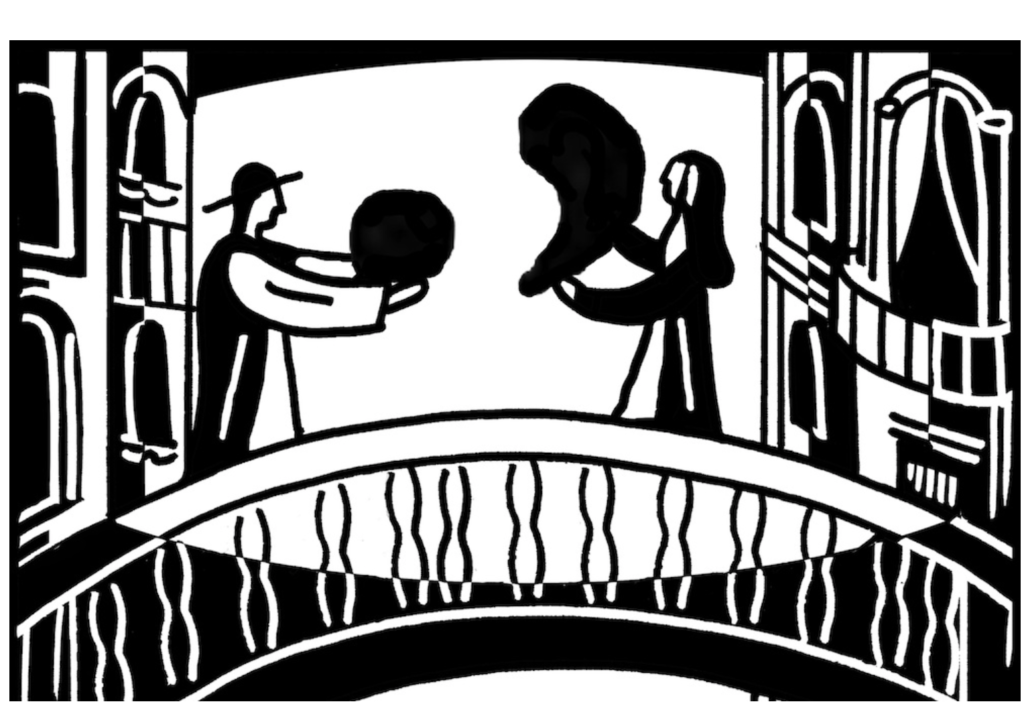
The book is enlivened with clever drawings at the beginning of each chapter.  The prose is easy to read. Recommended for pedants.
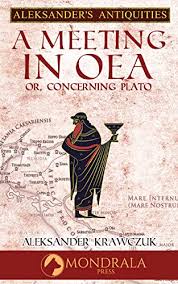
Plato, Plato, wherefore art thou.

A Meeting in Oea, or Concerning Plato (1970) by Aleksander Krawczuk 

Good Reads meta-data is 243 pages rated 3.38 by 21 litizens

Genre: fiction.

DNA: Ancient Greek.  

Tagline: It’s a long (winded) way to Alexandria.

Verdict: All trip, no arrival 

It is 150 A.D. when a near-sighted, round-shouldered, shuffling scholar leaves Carthage (Tunis) to go to the distant and fabled library at Alexandria, where he hopes to complete a biography of the divine Plato.  The trip does not go smoothly and Scholar becomes stuck in Oea (near Tripoli).  Travelling by the inland road he misses the shores of Tripoli.  

In his trials and tribulations Scholar finds solace in passages from Plato’s works.  He also describes some of Plato’s life, like the name of his mother, father, and sister, as well the brothers.  We learn the back stories of some of the characters whom he chose to name in his dialogues like Cephalus and Polemarchus.  Plato never married and sired no children it seems, though why is neither alleged nor suggested.   Indeed, there as much basic biography in this book as in Robin Waterfield’s book on Plato subtitled ‘A Life.’

I needed a map and Wikipedia to follow his path.  

Originally published in Poland in 1970 it might well have seemed to be social criticism then and there, though that is not immediately apparent to this reader.  

It is largely expository with little dialogue and no action to speak of.  The result is slow moving, but it does move, and at times is moving.  Those with short-attention spans need not bother.  

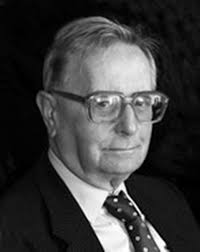
Aleksdander Krawczuk

The resident Mechanical Turk at Amazon struck again because I had earlier searched for a biography of Plato, as in the Waterfield reference above. 

The author Polish was professor of Philosophy with other like titles.

——-

Everyday occult

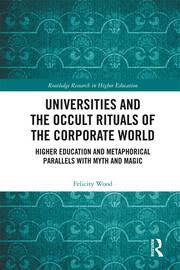
Felicity Wood, Universities and the Occult Rituals of the Corporate World (2018).

Good Reads meta-data is 219 pages, rated by ….  [It is listed without any readers’ reactions]. 

Genre: Polemic.

DNA: South Africa.

Tagline: ‘Dr Faustus will see you now.’ 

Verdict: Depressing.

Felicity Wood has long studied occult witchcraft and its allied practices in sub-Saharan Africa, and as she observed the evolution of the corporate university in the last decades she became aware of the similarities between the managerial practices that grew up in them and the rituals of myth and magic in the occult. 

Amen, sister.  

Superstition takes many forms, besides religion. The book offers to an increasingly depressed reader a detailed comparison of the metaphorical similarities of these two worlds.

She makes that case in good part by quoting from the maelstrom of mission statements, performance goals, impact declarations, management directives, justifications for near perpetual re-organisation, and so on issued by the managers of universities far and wide, not just South Africa. While a reader may not accept entirely her premise, still one nods in agreement very often with her comparisons and interpretations.

Just as witchdoctors never proffer evidence for the effectiveness of their ceremonies but instead offer explanations of why more witch-doctoring is always needed, so too managers. When managers managing does not spin gold that can only be because even more managers managing is required. And more. 

If the words of university managers are taken as invocations of spirits, well, that makes as much sense as trying to take them literally since most of the rhetoric is hollow: excellence, quality, impact, and so on are intoned at every breath, yet no one knows what they mean. But like prayers, perhaps mouthing them pleases the unseen powers of market, economy, and the most high and mystical of all – money. Mammon is indeed our god, and few of us prove worthy of that deity.  

A few quotations follow to sample the text. 

#####

‘One respondent contended that one specific vampire tale was factual, saying, “It was a true story because it was known by many people and many people talked about it.”  (Luise White, Speaking with Vampires: Rumor and History in Colonial Africa (Berkeley, CA: University of California Press, 2000), p 31.)  All too often, the corporate fabulation at restructured universities has been made to seem more convincing by this means.  A mantra has been repeated so many times that it has become reality.’  

‘Wholly fictive place called “the real world” is quite unlike the actual world you and I live in. .. . [T]his invented entity called “the real world” is inhabited exclusively by hard-faced robots who devote themselves single-mindedly  to the task of making money.’  Rational calculators of material self-interest and nothing else.’ It is as false as reality television programming. 

‘They also owe their prevalence to the fact that they have been utilised to reinforce a further, related piece of corporate folklore: the notion that private profit is synonymous with public good.’  

‘In general, the fantasy seems to prevail that by imitating corporate models, imposing managerial chains of command and invoking the jargon of the corporate world, as well as some of the mythologies that emanate from it and reinforce its ethos, a magical transformation can be wrought, by means of which universities can be transmuted into more productive, accountable and efficient institutions, working for the greater public good. This state of affairs has come to pass as a result of a faith in the near-magical potency of the corporate world, fuelled by the vague belief that the corporate sector, situated as it is in local and global marketplaces, is closest to the sources of economic profit.’ 

‘This might be one reason emphasis has been on outward forms and ritual activity, rather than meaningful substance. Indeed, market-oriented institutions tend to be characterised by their ritualistic imitations of the corporate sector and their symbolic enactments of certain key qualities associated with this domain, such as excellence, quality, productivity and accountability.’

‘The voodoo-like potency of words include quality, excellence, mission, premier, benchmark, strategic, top rank, world-class, flagship, team-building, auditing, performance, accountability, and even ethics.’  

Quality is a term laden with mystery and magic partly to compensate for the fact that, like excellence, it is essentially a vacuous term: a receptacle into which different meanings can be poured.  As one of the principal words of power, the word quality is routinely uttered for purposes of ritual and enchantment, as if calling on this concept will cause it to manifest itself.’

Felicity Wood

‘Like quality the word mission has spiritual resonance evoking the image of a sacred quest.’

####

It is great fun to read, though hard-going, because even as the text ridicules the prolix jargon of corporatism, the book itself is riddled with an an opaque vocabulary of –isms , –itions, and –ites drawn from social science.  Much of this vocabulary is as vacuous as that which it bewails.  Sad, but true.  

I had hoped for some reality testing for the mystical properties of business that make it efficient and effective.  My experience of private business — large and small — has sometimes shown it to be incompetent, indifferent, confused, inconsistent, idiotic and the like.  And yet successful. The volatility of businesses that come and go is likely to be due to these factors rather than to vigorous Darwinian competition.  This is true in both large and small examples. 

Check you Enron or Boeing share prices for evidence, or book a musical chairs seat on Qantas. 

Good old days as she frequently notes were different but not better, but I have omitted those remarks since I know them so well.

Not a book likely to be reviewed in the higher education press and literature.  

Saving Socrates

The Plot to Save Socrates (2006) by Paul Levinson

Good Reads meta-data is 272 pages, rated 3.56 by 488 litizens. 

Genre: Sy Fy +  

DNA: [See title.]

Tagline: Socrates did it!

Verdict: Tour de force kickoff return…fumbled!

A grad student is completing a PhD dissertation on the introduction of Ionic Greek in written form about 500 AD. She is an archive rat and burrows into files undisturbed, perhaps for centuries, she finds…a whomping great mystery.  It is the year 2542 AD and the tech is even more techie than today but recognisable.  

What she finds, well, in fact, it is given to her by a mystery man, seems to be a fragment from a hitherto unknown Socratic dialogue by Plato.  It comes with several hallmarks that suggest authenticity.  The papyrus fragment is a copy of that lost dialogue in Ionic Greek from 500 AD, so declares a carbon dating certificate in the same file. The Greek text certainly reads like Plato.  Could it be? (By this time, I certainly wanted to know!)

Aside: There have been many spurious Platonic dialogue since the days of Aristotle.  Forgers made them to sell to libraries and collectors.  Intellectuals made them to pass off their ideas as Plato’s.  Students made them to see if they could.  Women made them to get published in a man’s-only world.  These frauds, no doubt, continue to this day.

 But, wait, there is more.  SPOILER! The fragment is a conversation between Socrates and … a time traveller come to rescue him from the hemlock.  Holy neurons!  

That sets her off on a chase to find the rest of the dialogue.  Authenticate it.  Find the original.  Trace the mystery man.  Identify the time traveller. Six directions at once!  

Now about that time travel.  You sit in a chair in a secret room and use a remoter built-into the chair’s arm and whoosh.  Well, no whoosh.  You’re just there in the chair, but the calendar on the wall has changed.  Back-and-forth they go through time.  Aside:  a time travelling sofa features in (T)Raumschiff Surprise – Periode 1 (2004).  

After that whiz-bang start it descends into thriller mode, cutting back and forth, proliferating characters, and generally confusing me.   The ease with which ancient Greeks, Egyptians, Nineteenth Century Americans, and others accept time travel undercut that plot line.  The ease with which the time travellers surround themselves with minions and have plenty of money wherever they pop up likewise let the air out of the balloon.   Oh, and one them, his frequent time traveller allowance depleted, sailed in a Greek trireme to the Americas. 

Instead of dwelling on such matters as above, we have a hidden hand conspiracy that envelops one and all.  Boring.  

Paul Levinson

It is written as a thriller and that spares the author much and places all the responsibility on the reader to make sense of the to’ing and fro’ing, and this reader declined that onus.     

Amazon’s Mechanical Turk’s suggested it, for which thanks.  

P.S. I tried vol 2 and gave up: impossible to follow

Plot by Salvator Dali.

The beginning did not come first.

Maigret’s First Case (1948) by Georges Simenon. 

Good Reads meta-data is 192 pages, rated 3.69 by 1664 litizens.

Genre: Krimi.

DNA: France; sub-species Simenon.  

Tagline: In the beginning….

Verdict: Introspective.

A callow Jules Maigret and his blushing bride Louise have taken an apartment with his income as a police secretary at an arrondissement station.  The job is largely clerical but one night when he is working late in his youthful zeal and the duty officer is out on a call he records the statement of a witness who reports a gunshot.  Since it is what police officers do, Maigret takes it upon himself to investigate without waiting for a superior officer.  

In so doing he enters a closed world of a very rich but strange bourgeois family in whose mansion the shot seemed to have been fired.  Yet there is no evidence of such an occurrence when he rouses the household at 2 am to find out. Ooops!  

Evidence or no, there is something odd about this place and these people and he worries away at it. When he reports all of this to his chief it seems absurd, but the chief with more than a touch of condescension encourages him to investigate, but softly, softly, perhaps to give him practice. Maigret does so with the patience and persistence that would mark all of his investigations.  

When circumstances forced young Maigret (and it hard to picture a young and gangly Maigret) to leave medical school, the first job he could land to make money was with the police where his education and good handwriting fitted him to be a records officer.  In this story he is posted to the fictitious Saint Georges station as secretary to the chief of this outpost, far from the Quai des Orfeves.  Musing on the events that placed him there Maigret thinks the occupation he should have is part doctor and part priest: 

‘People would have come to see him the way they consulted a doctor. He would have been a sort of mender of destinies.’  Not because he was clever but because could put himself into anyone’s shoes.  Balzac 

This is Maigret’s motif: to become one with those he investigates. This melding is beautifully realised in some of the novels.

The solemnity of that reflection was relieved when I laughed aloud at the following passage:

‘He hadn’t slept with his moustache net on and he had to straighten the tips…’  

Moustache net!  Great Movember’s Ghost!  My efforts to find such a net for sale online have failed.  Must chaps now do without such a useful accessory?  See an example in use below.

This book is good evidence for not reading a series in publication order.  While this is case Number One in Maigret’s career it is book number thirty (30) in the publication sequence.  

There are occasional references to the future so the retrospective nature of the account is implicit, but this story is played out in a linear sequence.  

Having finished a period krimi with steaming heaps of superfluous historical detail and a mob of characters, I wanted something clean and focussed. Enter Maigret.