
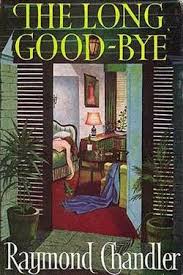
Good Reads meta-data is 379 pages, rated 4.19 by 46,317 litizens.
Genre: Noir; Species: Sunshine.
DNA: SoCal.
Verdict: And it’s goodbye from him.
Tagline: Portrait of Madison.
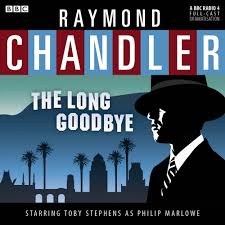
This is the last complete outing for Phillip Marlowe. It has many good moments which are outnumbered by bad ones. I found it hard to sympathises or relate to either Terry Lennox or Roger Wade, and the women in their lives seem to be clothes horses and little else.
All in all, I found Lennox and Wade, and Marlowe himself for that matter, poor little rich boys decrying how tough life was on them. Yet they all live comfortably just as they want in what seems to be an undemanding environment without health or wealth worries. Yet each rails against his lot in life. Much of it seemed like an old man grumbling about contemporary society which has had the audacity to pass him by.
Whoops! This just in! Boy, was I wrong…again! The dénouement at the end is superb and it makes use of most of what went before, some of which I had thought was useless padding. Though I have read it two or three times before I was still taken aback by the wrap. It explains a great deal about the broken characters of Terry Lennox, Eileen Wade, and Roger Wade (a stand-in for Chandler himself) that had irked me. It also gave the much put-upon Bernie Olhs a chance to shine. Chapeaux! Chandler’s master’s touch was, well, masterful.
Having vented that and eaten my order of crow, I enjoyed much of it. Though the policing early on was over-egged I did like the distinctions drawn among the police officers. I rather liked the effort Lennox always made to be polite and not to slur. I liked Dr Verringer’s affronted dignity. (On the other hand, Dr Loring seemed to be a cardboard popinjay.) I liked Earl’s showmanship and wished he had an act two. Today one might say Earl was neurodivergent. That is, nuts! Randy Starr’s aloof chill was perfect.
Most of all I like the importance of things not did and not said. Like the spaces between the stars in aboriginal astronomy, they are more important than the shiny distractions.
However, I did find the cynicism piled high for no reason other than to explain why Marlowe was such a jerk and who seemed hate everyone else who had the misfortune not to be the all-wise (to other people’s faults) Marlowe. Castigating everyone else is not social criticism; it is just ranting. I supposed some of Marlowe’s posturing was Chandler’s effort at a Code Hero, but it was inconsistent, as Marlowe himself says.
Notwithstanding all of that and more, I have a soft spot for this book because it was the first Chandler title I ever read; that was in 1973. He had been recommended to me by Don Andrews, and one wintry night on a break from typing a draft chapter of the PhD dissertation in the unheated basement of the rented Edmonton house, I took a break and went out to the neighbourhood convenience store on 82nd Avenue for a snack to keep me going: deadlines to meet. It was near to the 10 pm closing time for the store. Consequently I was not alone, there was a line of a few other last minute pallid nocturnals at the cashier which meant I stood for a few moments next to a wire spinner rack of paperback books, and the one directly in my eye-line was The Long Good-bye by Raymond Chandler. It seemed a message so, after checking my scant money, I added it to my boodle ( a packet of shelled and salted sunflower seeds and a bottle of coke, I suppose) and paid up.
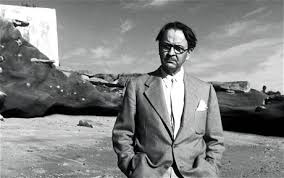
I returned to the cellar and revivified with the walk and the fuel I did complete the chapter and pushing aside the manual typewriter I took up the book, entering Chandler’s imagination. I kept reading until Earl came on the scene in Chapter 16, that means to page 129 well after the midnight hour. I was gripped; I was hooked. There was no turning back. It was my doorway to krimi noir where I have since spent many happy hours.
My soft spot does not extend to the egregious 1973 movie that mangled the story to fit the director’s avowed agenda, and had an atrociously miscast Marlowe, who has since monopolised the Audible recordings of Chandler stories. Aaargh!
For entertainment I read some of the one-star reviews on Good Reads. The prize one declared the book to be irrelevant to India. If that is the criterion let’s put it to the test. That means no comfortable well-off person in India is gnawed by self-doubts. Nor that any drunk is unsure about what he did when tanked. That no wife grew quietly to despise her husband. There is no Indian doctor was so full of self-importance that the rules did not apply to him. That no All India police officer manipulates suspects to get the result he wants. That no elected officials is too busy courting votes to do the job he was elected to do. That no soldier returns home broken in spirit by the experience of combat, capture, and torture. India must be quite a place if none of its billion people are like these.
And they say, reading broadens the mind.