

Good Reads meta-data is 160 pages, pages rated 3.97 by 730 litizens.
Genre: krimi.
DNA: Brazil.
Verdict: What a setting.
Tagline: Man overboard! And good riddance.
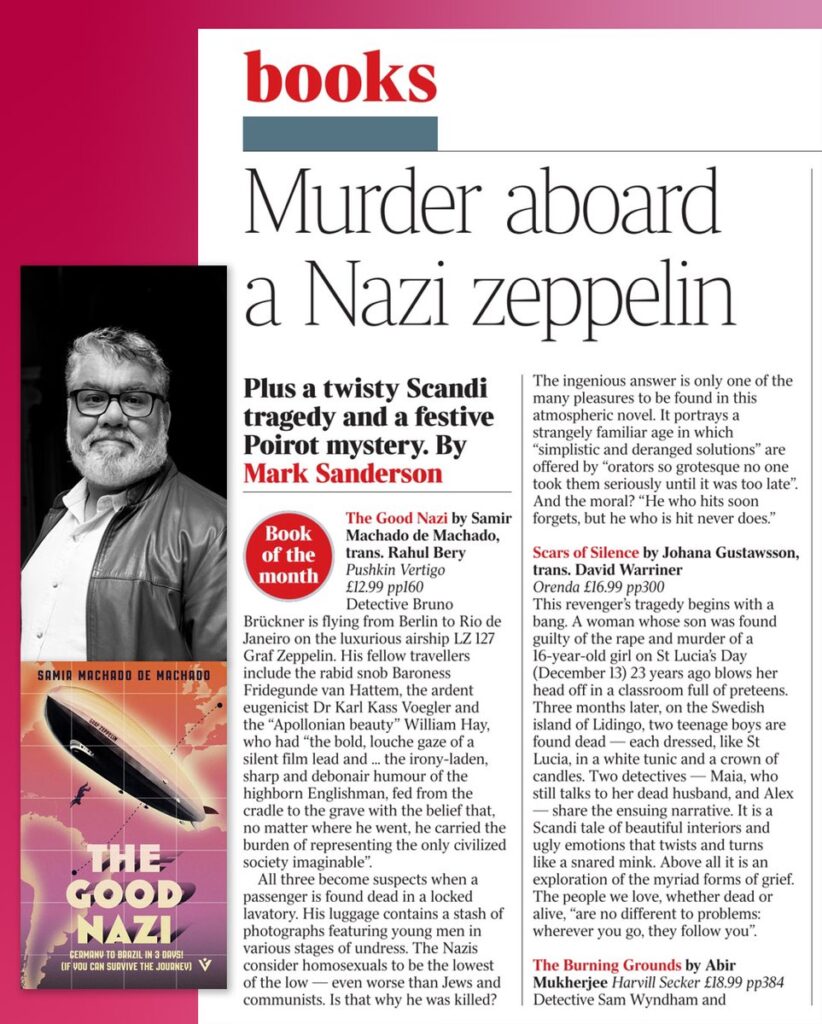
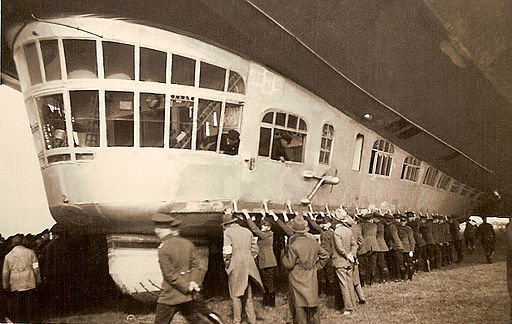
It is 1933 and the prototype of that idiot has just become German Chancellor. The Graf Zeppelin is winding its way from Wilhemshaven to Rio de Janiero with its wealthy passengers. There is some intriguing description of such journeys and how Zeppelin’s navigated. The first airship had been patented in 1894. Commercial flights began in 1910 with what was the first private airline. Before the start of the Great War (1914-1918) more than 10,000 passengers had travelled on 1,500 flights. In that war they had been used to bomb England. Only in 1926 when the post-war restrictions relaxed were new German zeppelins built. These were bigger and better than their predecessors and plied the Atlantic route in competition with steamships. A ship voyage of weeks was reduced to days on a zeppelin. By 1937 they were well known enough to figure in Charlie Chan at the Olympics (of 1936).
Sidebar: in 1975 ground transportation magnet Peter Abeles predicted the return of the airship as a conveyance in Australia 2025 (in a library near you). Well, we do see blimps these days hanging over football stadia for meaningless aerial views to advertise sponsors. Maybe that is what Abeles had in mind….
In this story a passenger is found dead in the men’s WC much to the inconvenience of the other passengers. On board by some manner of means (how could he afford it?) is a Berlin police detective who takes over the investigation to determine if it was suicide, accident, or murder. Since the deceased joined the fight in northern Brazil, he was only briefly on board, but he did dine at a table with five others, so they become the focus of the interrogations. Among them is a Prussia aristocrat in love with the sound of her own voice and gin, a eugenist come to Brazil to advance the cause of racial genocide, an English scion of wealth and privilege, and some other stereotypes.
The copper decides discretion is best – see cover art and remember Phil Sheridan on the good. Then there is a denouement in a Rio hotel room that caught me by surprise, and like a lot of these climaxes completely undermines all that went before it. Not very satisfying.
Moreover, it leaves many a loose end flapping in this reader’s mind: the coincidence of the deceased passenger even being there, the unspoken complicity between the ‘detective’ and the lord, why was the ‘detective’ playing detective from the start if the arrival of the soon to be deceased passenger was coincidental, why was the deceased so damn nervous (had he read the next chapter? And most of all, how was the deed done?
Whether there are any good Nazis, there are number of books with that title.