
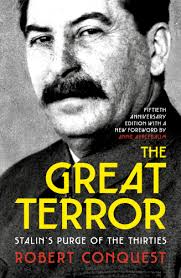
Robert Conquest, The Great Terror (2018 [1968])
Genre: History
DNA: UK
Good Reads meta-data is 584 pages 4.13 rated by 1,202 litizens.
Verdict: Grim, doesn’t begin to describe describe it.
Tagline: ‘I told you so!’
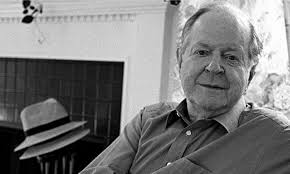
Poet Conquest turned his hand to compiling and writing history and the reviewers at the time of the first edition did not let him forget it. I have a foggy memory of some the reaction to the first edition because I had just finished an undergraduate course on Soviet history. What was this storm in a tea cup about?
Conquest conceived of Stalin’s reign as one of terror, and compiled evidence of the depth, depravity, scope, and scale of this murderous policy. The likes of the egregious Noam Chomsky dismissed his argument and evidence and took the position that there was no difference between Western nations like the UK and the Soviet Union, embracing the so-called Convergence doctrine.
Others assaulted Conquest for relying on hearsay, secondhand reports, and personal (ergo biased) testimony. If all such sources were excluded, all that remained were the official Soviet accounts which in the 1960s had little to say about that period, even after Chairman Nikita Khrushchev’s famous 1956 secret speech denouncing Stalin whom he had loyally served.
That Conquest had written poetry was cited as evidence for his incompetence as a historian, as evidence of his penchant for fiction, his soft-headedness: Ad hominem one and all. Shoot the messenger and the message dies with him.
In the introduction of the 50th anniversary edition, Conquest wrote that the first edition was well received. What is that? Selective memory, or, as I suspect, irony.
Conquest’s sin according to the 1968 critics was to argue that terror was the foundation policy of the Soviet Union. According to Conquest it had been incipient in Lenin’s time, and became fully developed with Stalin. The first line of defence proffered by these apologists was to quibble over the definition ‘terror.’ The next was to cite the many confessions of the well-known victims. There followed an appeal to the sheer incredulity of the alleged scale of scope of the terror attributed to Stalin.
But of course the scale and scope of the terror were exactly the point. It surpassed belief, and yet it happened. As to the confessions by a few score of the known victims, Arthur Koestler had already demolished them in his Darkness at Noon (1940), though it, too, had been dismissed by many Western apologists because it was a novel.
The quantitative scale of the terror is indeed astounding. It wasn’t until Saddam Hussein that a murderer killed as many of his own population in proportion as did Stalin. The death toll of Stalin’s tenure ranges up to 20 million. In individual cases in the Purges an innocent would be convicted and murdered, his wife would be arrested and sentenced to years in Siberia and then five or six years later executed. Oh, and a son or daughter would be arrested eight year later and executed. All were guilty only by name.
Conquest adds depth to Koestler’s explanation by painting the party as a metaphysical, spiritual being of veneration, a Red Christ on Earth. Self-sacrifice to protect and further this entity even when it seemed to be in error was the duty of a true believer. ‘For after all it could not be in error, so the fault must be within me.’
The Terror operated at several levels. At the top it eliminated anyone who had opposed a single word Stalin had ever said (personal animus figured in much of it), who might be a rival (personal insecurity was another factor), or had an independent power base (insecurity again). Conquest’s Stalin is thin skinned and insecure. A typical manoeuvre was to arrange for the murder of one those rivals, then blame the murder of this comrade on a conspirator among the other rivals and eliminate him, and everyone he talked to …and so on in a conga line of murder. It seemed that anti-Sovietism was a contagion transmitted by proximity.
Once these people were eliminated, they were replaced by Stalin’s sock puppets (like those we see strutting around Washington DC these days who will disappear soon enough, well not soon enough, but disappear they will). A similar tide was unleashed by the regional levels of the Party where anyone who did a job competently was eliminated in favour of a zealous Stalinite. No light was permitted to outshine Comrade Number One, who aspired to being Comrade Number One and Comrade Only. Experts were replaced by zealots. Knowledge or being factually right, these were irrelevant or worse, signs of disloyalty. Of course since the zealots brought nothing to the jobs their tenure depended on their zeal for anyone could and did replace them.
Since the peasantry, the overwhelming majority of the population, had never embraced Communism with enthusiasm, it had to be beaten into submission with contrived famines, massive relocations (like the movement of American Indians to the Badlands), and simple, random murders by ICErs. At the bottom it became the rule of thugs.
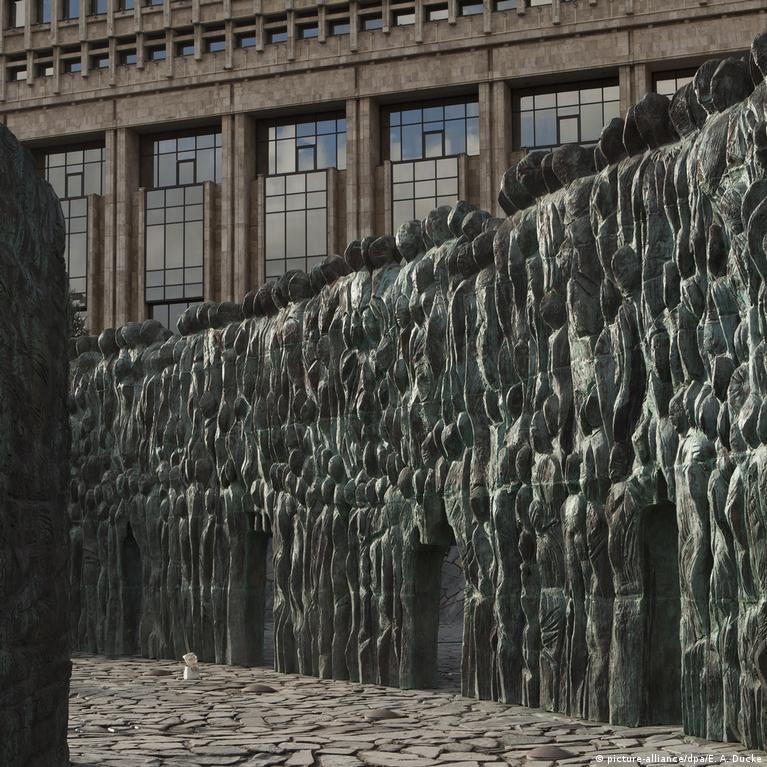
Having just read a biography of Henry VIII which touched on his own reign of terror with its enormous death toll, similarities are many, including the willing executioners. Who — Surprise! — were the next to go to the block.
The Soviet army presented a special case since it had been created and inspired originally by that great Satan named Leon Trotsky, and so was cursed by original sin. Once Stalin had surrounded himself with puppets in the Party, he began on the army. Since all potential critics had now been eliminated and replaced by insecure sycophants, the charade of legality was no longer played. In one case five generals were murdered before their arrest papers had been signed. There were cases of mistaken identity that came to light and … they were murdered all the same.
Trotsky was a zircon mirror of Stalin and that made him a threat if only imaginary. This is an example of the shafts larded in the text.
Of all the ironies in the story the one I will leave readers with, be there any, is this. The willing executioners were themselves the next victims, and the next.
There is a superb concluding chapter that pulls together much of the descriptive material into conclusions about the nature and effect of the Great Terror, and an epilogue about its continuing influence. All grim. Very. It beggars belief that one man could ruin a country and that disbelief was crucial in making it possible for him to do so. In that is a warning for today. One that will almost certainly not be heeded.
Georges Clemenceau once said it takes lot to ruin a country, but it can be done, has been, is, and will be.