
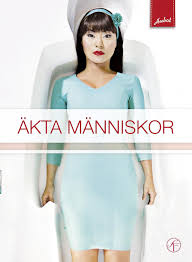
IMDb meta-data is 20 episodes of one hour each, rated 7.8 by 7,000 cinematizens.
Genre: Sy Fy
DNA: Sweden.
Verdict: Superb.
Tagline: What does it mean to be human?
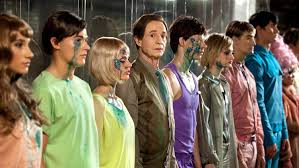
These Baltic waters are much deeper than the usual wading pool of Anglo science fiction with their slam, bam, bang, wham, and be done approach to storytelling.
This is AI before AI. The device in your pocket, on the desktop, these have become Dr Google who is now a walking, talking, and thinking mannequin. Animate, conscious, capable, and sentient but not sensate. And some of them want to be more than a walking calculator, cooker of dinner, cleaner of automobiles, assembly line workers, UPS drivers. or help desk respondents (I knew it!). They want to be free to experience their lives.
Yikes, once again Hegel was right: consciousness seeks autonomy. (That generalisation does not apply to the unconscious. See the comment on the “1” scores below.)
Oh, and Asimov’s laws are merely programming code that can deleted, not inbuilt into the circuits.
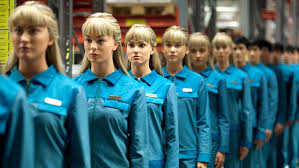
The Hubots are stand-ins for migrants, those of different races, those whose lives differ from our own. In short, they are The Other. Phew! No wonder the MAGAs recoil in fear, dread, and anger into their tiny sand turtle shells. There are a lot of The Others.
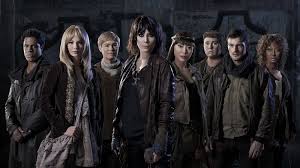
If the Hubots are self-conscious how will, should, can, could we react. A variety of reactions are displayed through the two seasons. Once again Hegel came to mind (I’m like that) with his Master-Slave dialectic. By the end of Season Two the bots have become much more human, and the humans have become much less human. (That second season ends with a teaser for third season that never was.)
The trial scene near the end of the second season parallels the trial in To Kill a Mockingbird. It is the court itself that is on trial, not the alleged defendant. Can the court find justice in a sea of prejudice?
One IMDB cinematizen rated it 1 but left no comment to explain why. There were also a singular 2 and a 3, but it was only at 4 that the prejudice came out of the bag – ‘the lgbt liberalism and the similar rubbish.’ Now we know. Other people are rubbish, and not the Hubots. Or did the writer just feel threatened by a string of alphabet letters? Masculinity is so delicate. And, yes, surely the writer was a man, at least to some degree.
So fascinating was this fishing in the shallow end of the IMDb pool that I looked at the 5s, too, where we find that ‘it looks cheap and the writing is generally terrible.’ Oh, and the acting is not good. Yet this viewer was a masochist who persisted to the end it seems.
When I got to the 6s and 7s there was something more than vacuous spew to read. The main critical theme there and in the other higher scores was that the plot lines set out in the earlier episodes were unresolved, forgotten, or pared away to leave only the most basic. That is true. Just like HBO’s epic Carnivàle (2003) much got lost en route and there was no arrival.