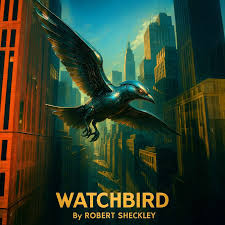
GoodReads meta-data is 49 pages, rated 4.09 by 435 litizens
Genre: SyFy.
DNA: USA.
Verdict: timely.
Tagline: A little knowledge is dangerous.
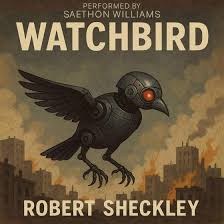
To reduce homicides Watchbirds are created to anticipate and prevent them. Since it is impossible to program the mechanical birds for every eventuality, they are endowed with the capacity to learn on the job. That learning combined with their absolute literal-mindedness leads to catastrophe.
A cautionary tale about A.I. technological solutions to human problems. The one law we all obey is the Law of Unintended Consequences. Newton’s corollary is that ‘If a government creates a law, its unintended consequences will be equal and opposite to its original purpose.’
The underlying conservation of energy assumption does not apply in politics, but a revision of Newton’s corollary would be that the reaction to a law will be larger and more divergent than the original. The reaction will be more than equal and it will vector around the spectrum. It will not only be equal and opposite, though that will occur, but there will be other reactions on other vectors. Some will say that it is not enough; others that it is too much; and all points between. Some will say it is too little; others too much. Too late; too soon. The talking heads will spew.
Or to put it more succinctly: Be careful what you wish for because you may get it, good and hard!
The moral of this story is far more cogent than the current babble of talking heads about A.I. It is a much more focussed tale than the movie Chien 51 (2025) on the same theme.
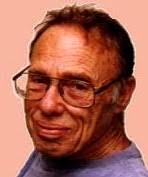
My thanks to Yelena for bringing the story of my attention. At times past I used Robert Sheckley’s The Status Civilization (1960) in teaching Thomas Hobbes’s Leviathan.