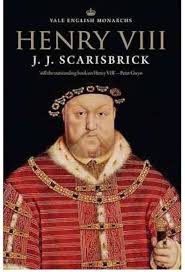
Hank 8

John J Scarisbrick, Henry VIII (1968).

Good Reads meta-data is 715 pages rated 3.85 by 218 litizens.  

Genre: Biography.

DNA: English, very.

Verdict: Miles from the cartoon stereotype.  

Tagline: ‘I am; I am.’ (For those with a long memory.)
Teenage Henry came to the throne unbidden, as it were, when his older brother died. The spare took command from the heir like George VI when bro Eddie stood down. High policy of a Spanish entente led to matrimonial politics as it often did in this period, and at 19 he married his brother’s widow, Catherine of Aragon who was 24.  They set about their first duty to the realm to produce an heir and a spare themselves.  Many were sired but unborn. Stillbirths, miscarriages, and death I lost count 6 in all. Worse! A girl named Mary.

Through all of this and that which followed as she was displaced, Catherine was pious, resolute, dignified, perspicacious, and stable unlike her mercurial husband and then ex-husband. Hank could have done well to learn from her but he was too immature to do so, and it seems from this telling, because he was the spare, little of his upbringing prepared him for the crown.

The popular stereotype of a bloated degenerate chasing women is far from the mark, though toward the end of his life he did begin to live down to it.  The quest for a wife was not just libido, after all kings have had mistresses since, well, since there were kings, but had much more to do with the succession.  He needed his own heir and spare, first to secure his own tenure, and, secondly, to keep the realm stable.  If foreign rivals, if domestic aspirants thought there might be an interregnum, they would act accordingly.   Plague, fever, accidents had killed many a king at an early age, and might do so again. Wait and see, temporise is often the best policy.
Without an heir, many a magnate might aspire to the throne and manoeuvre, rebel, or resist to get it when Henry died, and might even be tempted not to wait for his natural death.  Equally, without an heir, and with domestic instability, foreign potentates might prefer to wait him out.  

Matrimonial politics was a linchpin of the age, and it is complicated.  If he took an English wife from a noble family, that family would be positioned near the throne and might use that leverage to plot against him. Moreover, that favouritism showered on one noble family would alienate every other great family and set them to plotting. To prefer one is to alienate all others. Making one friend makes many enemies.

Ergo, there is something to be said for a foreign wife. Ah, but that too had perils.  To take a German wife related to the Holy Roman Emperor might please that vacillating incumbent in his long-running contest with the Pope, but… there is France to consider, and Spain, and the Pope himself.  And so on and so on and so on. To make a matrimonial alliance with one power was to alienate the others. 

Foreign war he found much harder than jousting and soon gave it up, turning to conniving where – after the passing of Wolsey – he was regularly out connived by one pope after another, one French king after another, one Spanish king after another, and one Holy Roman Emperor after another. Wolsey in foreign policy and Cromwell on domestic matters, if left alone, were successful but their successes bred Henry’s suspicion and distrust for he seems to have been a deeply insecure man – if we venture onto psycho-biography – beneath the bluff mask.  

[ See on You Tube ‘Re-creating KING HENRY VIII with the help of AI.’ ]

This biography ends with a summation chapter that weighs Henry’s credit and debits.  However, this spreadsheet does not include the death toll of his regime, so I have added a comment on that below. 

Credit – He laid foundation of England, Great Britain, and eventually the United Kingdom to become a nation(s)-state following the example of Spain and France; established a professional bureaucracy; began building a navy with warships and not just transports; removed the foreign influence of Rome, established the national church and all that went with it; did much to codify the laws of the lands…and more.

Debit – He inherited a prosperous and stable realm which he drove into and out of debt with his reckless gambits, and adolescent indulgences that lasted his entire life. He destroyed his two most able and loyal ministers in Wolsey and Cromwell, and paid the price thereafter, or his realm paid for him.   The foreign policy achievements of his tenure were largely of Wolsey’s making, while the domestic achievements came from Thomas Cromwell’s hand.  

No sooner had he become king than he embarked on the first of three unsuccessful foreign wars to reclaim the French lands that by convoluted logic were English (thanks to William the Conqueror).  He squandered a great deal of dosh and good will — both domestic and foreign — in these adventures.  The tales of negotiations with Spain, France, Pope, and Holy Roman Emperor put Machiavelli to shame with the duplicity, connivance, deceit, and downright lies. In most of these negotiations Henry paid, and paid, and paid to subsidise his temporary allies, especially when Wolsey was not there to restrain the royal cheque-writing hand.  
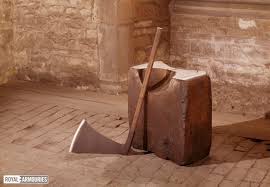
Then there is in his policy the rule of the axe in the domestic realm which slayed many.  Estimates of the death toll exacted in his regime very greatly from 72,000 to 20,000.  Wikipedia has a spreadsheet. Take a look. The wholesale destruction of people to make a new regime, reminded this reader of Stalin making the new Soviet Man by eliminating those who did not fit in.  Like Henry, Stalin fought off foreign enemies, disciplined a state bureaucracy, mobilised industry and recruited a huge army, built roads…often over the bodies of loyal subjects.  
John Scarisbrick

This book is closely argued and clearly written, larded with insights, and a boon in untangling reality for the reader.  It does not rely on cardboard stereotypes so beloved in the popular culture’s renditions of Henry, who, it has to be said, invited these depredations.  

The used volume I acquired is errant in that page 528 is succeeded by…page 625.  For second I thought I had read a lot more than I had in that afternoon, but then later page 672 is followed by page 577. Whew!  That means about 50 pages are missing between 528-577.  I have accepted that gap as Seshat’s will and leave it at that. Amen. (If you don’t know, look her up, yes Seshat is female. She is more reliable that the flighty Hermes who is created with creating the alphabet.)   My interest in the intricacies of Tudor theology and politics was sated and I chose not to pursue the missing fifty pages.  

The only other time I came across such a gap in a book was another Penguin edition, which this one is too, of the Forsyte Saga that I bought in Amsterdam.  When I discovered the gap I took it back to the bookstore and swapped it for another with a clerk who was very responsive. In this case, I did want to know what was in the missing pages.  N.B. If the missing pages had been the last chapter, well, I would have wanted to fill that gap.  It is more likely a narrative of theological hairsplitting.

Raymond Chandler, The Big Sleep (1939).

Raymond Chandler, The Big Sleep (1939).

Good Reads meta-data is 231 pages rated 3.94 by 167,404 litizens.

Genre: Noir. Species: Sunshine.

DNA: SoCal.

Verdict: Who dun it?

Tagline: Where in the world is Sean Regan?  

The immortal Philip Marlowe’s first big case, and today he is still on the job somewhere, in some media (paper book, film, play, poem, radio, audio book, ebook, and more) or another, doing something. Ergo, this is vintage Chandler, a man of his time and place and an ear for dialogue.  

That 1930s context means he lacks contemporary sensitivities.  Fortunately for us there are many Good Readers on the job to tell us that in the 1-Star reviews where they parade their virtues – many. Here is a sampling of their insights in bold with my reactions. 

  • misogynist – It is true, and an apt reminder of those bad old days that so many people are trying to turn the clock back to now. It is a big word that is often misspelled in the tirades. 
  • too many detailed descriptions – Yes, true and I also find it tedious, though sometimes it does deepen either plot or character.  Editors get paid to convince writers to cut such verbiage. Too bad it wasn’t done for this one to make it even leaner and meaner. Try Honoré Balzac, Charles Dickens, or Herman Melville sometime. These writers were paid by the word. 
  • actually 0-stars – ‘actually?’ The superfluous ‘actually’ is ‘actually’ unnecessary.  Emphatically unnecessary!
  • convoluted – Yes, indeed there are twists and turns and I got lost a few times with all those comings and goings. That however intrigued me rather than defeated me. If you don’t like a mystery don’t read a mystery.  
  • I don’t like this author – A valuable insight for others. 
  • homophobic – indeed, true and grating, and another salutary reminder of the bad old days that we are now reinventing.  
  • slightly sexist  – Slightly! Hardly. Wake up! Far more than slightly.
  • racism – Huh? I must have missed this one, but no doubt true.  

A lot of these comments sound like idiot’s revenge for having to read something assigned by others for classes, clubs, or sadism.  

It is also true that it is replete with brittle dialogue, memorable characters like District Attorney Wilde, General Sherwood, Eddie Mars, Butler Norris, Bernie Ohls, Harry Jones, and Agnes Lozelle, Canino; some very well judged negotiating with Cronjager, Brody, and Mars. Then there is the ghostly presence of the Irishman.  Vivian herself has no trouble holding her own despite the prevailing attitudes that outrage some readers. Carmen is addled, like it or not, such individuals exist. Finally, it did much to cement the krimi noir into the popular mind.  

After finishing The Long Goodbye the algorithm suggested this well-worn title and with little better to read at the time I started….  Yes, I have read it before, yes I have seen the totemic representation on celluloid, and yet it seemed fresh and new on the Kindle pixels.  So I went on, and on. 

Some hack is missing a chance to bring the late Sean Regan to life. 

The New Shoe (1951) by Arthur Upfield 

Good Reads meta-data is 189 pages, rated rated 4.0 by 367 litizens 

Genre: Krimi.

DNA: Strine.

Verdict: One of his best!

Tagline: A lighthouse, a coffin, a naked man, and one new shoe. Oh, and a dog.

Once again Inspector Napoleon Bonaparte of the Queensland CID has been  summoned from afar to investigate a difficult case, this time in Victoria at the fictional Split Point near Geelong. In a concealed cranny in the local automated lighthouse a maintenance worker accidentally found a naked dead man who had been shot dead. The first question is who is he? The second is why was he there?  And third, and foremost, Who dun it? (And why?)  

To find out, Bony, as he prefers to be called, takes up residence in Split Point rather as Jules Maigret would have done.  He befriends locals, starting with Stug, the aging cattle dog, and a carpenter who can talk to and about wood all the day long. The dog finds the shoe where no shoe should be and Bony is on the job!

It is a superb rendering of place, and a meticulous police procedural as Bony connects the dots of both things done and said, and things not done and not said that seem odd omissions. He makes a mistake, and has to admit it, only to find it wasn’t the mistake he first thought it was.  

Upfield was self-taught and a fast learner who pounded a manual typewriter in the back of a caravan that he customised himself, as he travelled around Australia, mostly in the hinterlands often in the remote outback to devise his stories. 

This was number 15 in the 29 Bony mysteries that Upfield published from 1929 to 1966.  He himself would have made a good character in one of his books.  Inevitably, his oeuvre has been mangled — ‘theorised,’ as they say (and I cringe) — by PhDs looking for fodder.  The result is unintelligible.  Abandon reason all ye who enter groves academic. Oh, and he wrote another dozen books on a variety of subjects.  

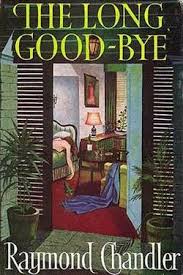
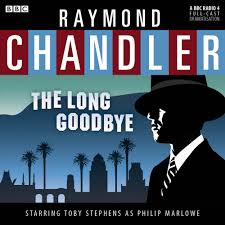
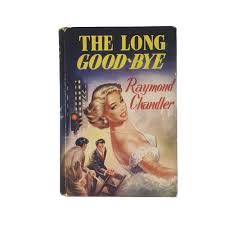
Raymond Chandler, The Long Good-bye (1953).

Good Reads meta-data is 379 pages, rated 4.19 by 46,317 litizens.

Genre: Noir; Species: Sunshine.

DNA: SoCal.

Verdict:  And it’s goodbye from him. 

Tagline: Portrait of Madison. 

This is the last complete outing for Phillip Marlowe. It has many good moments which are outnumbered by bad ones. I found it hard to sympathises or relate to either Terry Lennox or Roger Wade, and the women in their lives seem to be clothes horses and little else.  

All in all, I found Lennox and Wade, and Marlowe himself for that matter, poor little rich boys decrying how tough life was on them. Yet they all live comfortably just as they want in what seems to be an undemanding environment without health or wealth worries.  Yet each rails against his lot in life.  Much of it seemed like an old man grumbling about contemporary society which has had the audacity to pass him by.  

Whoops! This just in! Boy, was I wrong…again! The dénouement at the end is superb and it makes use of most of what went before, some of which I had thought was useless padding. Though I have read it two or three times before I was still taken aback by the wrap. It explains a great deal about the broken characters of Terry Lennox, Eileen Wade, and Roger Wade (a stand-in for Chandler himself) that had irked me. It also gave the much put-upon Bernie Olhs a chance to shine. Chapeaux!  Chandler’s master’s touch was, well, masterful.  

Having vented that and eaten my order of crow, I enjoyed much of it. Though the policing early on was over-egged I did like the distinctions drawn among the police officers.  I rather liked the effort Lennox always made to be polite and not to slur.  I liked Dr Verringer’s affronted dignity. (On the other hand, Dr Loring seemed to be a cardboard popinjay.) I liked Earl’s showmanship and wished he had an act two. Today one might say Earl was neurodivergent.  That is, nuts! Randy Starr’s aloof chill was perfect. 

Most of all I like the importance of things not did and not said.  Like the spaces between the stars in aboriginal astronomy, they are more important than the shiny distractions.  

However, I did find the cynicism piled high for no reason other than to explain why Marlowe was such a jerk and who seemed hate everyone else who had the misfortune not to be the all-wise (to other people’s faults) Marlowe. Castigating everyone else is not social criticism; it is just ranting.  I supposed some of Marlowe’s posturing was Chandler’s effort at a Code Hero, but it was inconsistent, as Marlowe himself says.  

Notwithstanding all of that and more, I have a soft spot for this book because it was the first Chandler title I ever read; that was in 1973.  He had been recommended to me by Don Andrews, and one wintry night on a break from typing a draft chapter of the PhD dissertation in the unheated basement of the rented Edmonton house, I took a break and went out to the neighbourhood convenience store on 82nd Avenue for a snack to keep me going: deadlines to meet. It was near to the 10 pm closing time for the store. Consequently I was not alone, there was a line of a few other last minute pallid nocturnals at the cashier which meant I stood for a few moments next to a wire spinner rack of paperback books, and the one directly in my eye-line was The Long Good-bye by Raymond Chandler.  It seemed a message so, after checking my scant money, I added it to my boodle ( a packet of shelled and salted sunflower seeds and a  bottle of coke, I suppose)  and paid up. 

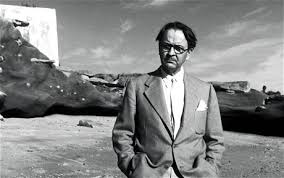
Raymond Chandler

I returned to the cellar and revivified with the walk and the fuel I did complete the chapter and pushing aside the manual typewriter I took up the book, entering Chandler’s imagination. I kept reading until Earl came on the scene in Chapter 16, that means to page 129 well after the midnight hour. I was gripped; I was hooked.  There was no turning back. It was my doorway to krimi noir where I have since spent many happy hours.  

My soft spot does not extend to the egregious 1973 movie that mangled the story to fit the director’s avowed agenda, and had an atrociously miscast Marlowe, who has since monopolised the Audible recordings of Chandler stories.  Aaargh!  

For entertainment I read some of the one-star reviews on Good Reads.  The prize one declared the book to be irrelevant to India. If that is the criterion let’s put it to the test. That means no comfortable well-off person in India is gnawed by self-doubts. Nor that any drunk is unsure about what he did when tanked.  That no wife grew quietly to despise her husband. There is no Indian doctor was so full of self-importance that the rules did not apply to him. That no All India police officer manipulates suspects to get the result he wants. That no elected officials is too busy courting votes to do the job he was elected to do. That no soldier returns home broken in spirit by the experience of combat, capture, and torture. India must be quite a place if none of its billion people are like these.  

And they say, reading broadens the mind.   

Yesterday’s tomorrow is so passé

Future ‘38 (2017)

IMDb meta-data is 1h and 15, rated 5.8 by 435 cinematizens.

Genre: SY Fy.

DNA: Faux.

Verdict: enjoyed it

Tagline: Formica. Formica? Formica!

A tribute to 1930s screwball comedies blended with a 1950s SciFi B-picture, it is presented as a rediscovered 1938 film that involves time travel to 2018.  What we get is 2018 as it might have been imagined in 1938 (by writers in 2017).  

This imaginary 2018 is a world of bright primary colours, instant messengers, television phones literally, battery-powered slide rules, self-sharpening pencils, the electro mesh that answers all questions, victual reality at restaurants, 24-hour news (bi)cycle, and so on.  It is sophomoric fun though it wears thin.

In 2018 the 1938 man is a fish out of water who cannot open a car door, wants to smoke tobacco cigarettes, and doesn’t have a personal television phone! The plot, such as it is, shows his discovery of this new world, including its slang. (Confession today I have been mystified by design-for-the-sake-of-design car doors that I cannot fathom.  Am I a man of 1938? [That’s a rhetorical question: Don’t answer it!]. But in an emergency how does one open the door, one might ask.)

It does try too hard and the result is overkill but the leads are winsome and can act better than the material with a poignant finale that was signalled for those with sharp hearing.  

D. Erskine Muir, In Muffled Night (1933)

Good Reads meta-data is 189 pages, rated 3.73 by 33 litizensGenre: krimi.DNA: Brit.

Verdict:  By the numbers.

Tagline:  True crime made unreal. 

Ingredients: wealthy Murray family with many sibs clashing over the dosh, live-in beautiful house-keeper, widowed scion, various grandchildren impatient for an inheritance, and others in the menagerie.  Then House-Keepeer is found murdered in a locked room and the mystery begins. The frame seems to fit one of the other servants or a wanna be relative, but does it….  I cannot say because I didn’t finish it.  

Slow, wordy, with remote characters.

I went looking for it because I read this author’s historical biography called Machiavelli and His Times (1936), which is more restrained than many other accounts of Machia. The author published many others of this ilk on Florence Nightingale, Oliver Cromwell, and the like. But she also tried her hand at this krimi.   

Muir was Dorothy Muir (1889-1977) who used the initial ‘D’ to get through the sexist ceiling at publishers. She took up writing when her husband died young and she needed an income in Edwardian England.  Writing was one of the few careers open to a woman and it allowed working at home with her children.  

This is one of three krimis in which Muir used a true-crime as the starting point for her story.  They might appeal to other readers.  


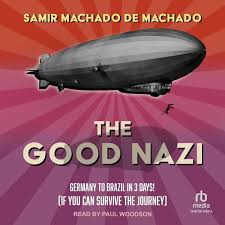
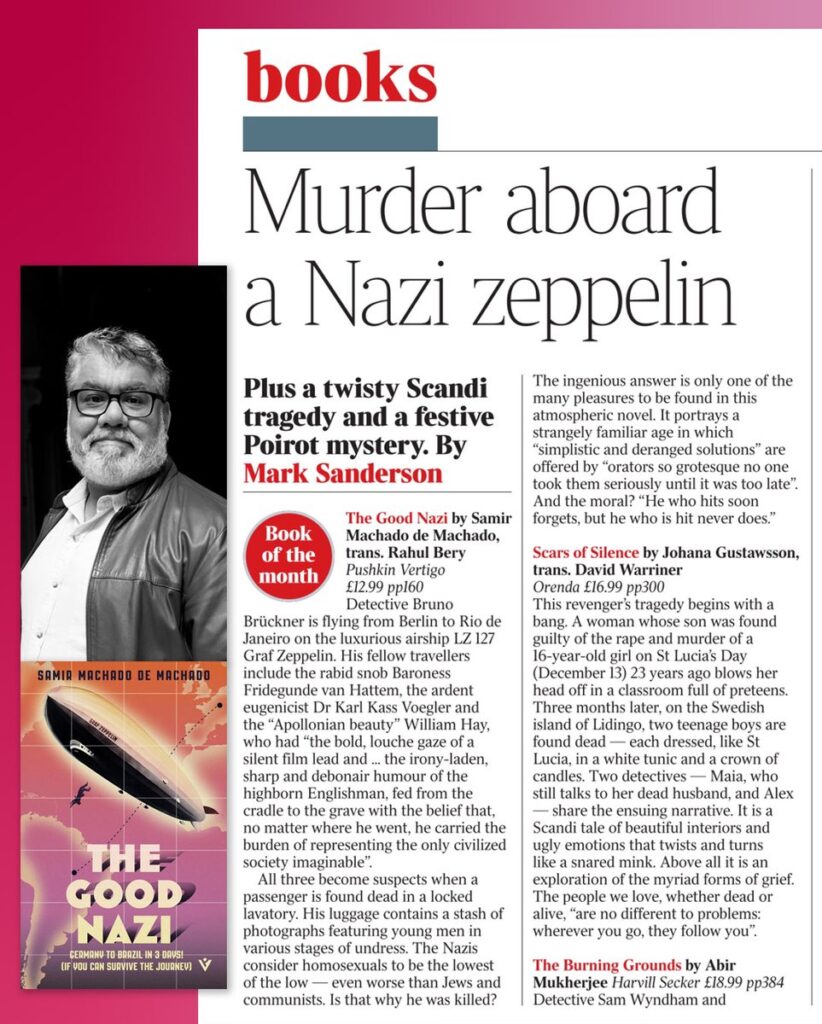
Samir Machado de Machado, The Good Nazi (2023). 

Good Reads meta-data is 160 pages, pages rated 3.97 by 730 litizens.

Genre: krimi.

DNA:  Brazil.

Verdict: What a setting.

Tagline: Man overboard!  And good riddance. 

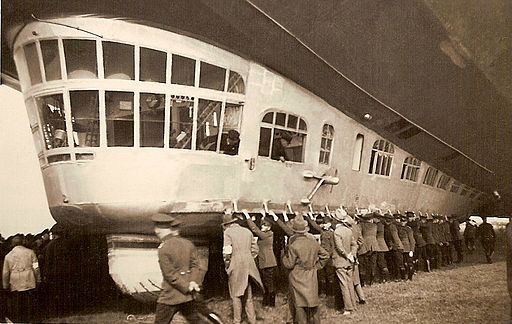
It is 1933 and the prototype of that idiot has just become German Chancellor.  The Graf Zeppelin is winding its way from Wilhemshaven to Rio de Janiero with its wealthy passengers.  There is some intriguing description of such journeys and how Zeppelin’s navigated.  The first airship had been patented in 1894. Commercial flights began in 1910 with what was the first private airline. Before the start of the Great War (1914-1918) more than 10,000 passengers had travelled on 1,500 flights. In that war they had been used to bomb England.  Only in 1926 when the post-war restrictions relaxed were new German zeppelins built.  These were bigger and better than their predecessors and plied the Atlantic route in competition with steamships. A ship voyage of weeks was reduced to days on a zeppelin. By 1937 they were well known enough to figure in Charlie Chan at the Olympics (of 1936). 

Sidebar: in 1975 ground transportation magnet Peter Abeles predicted the return of the airship as a conveyance in Australia 2025 (in a library near you).  Well, we do see blimps these days hanging over football stadia for meaningless aerial views to advertise sponsors.  Maybe that is what Abeles had in mind…. 

In this story a passenger is found dead in the men’s WC much to the inconvenience of the other passengers.  On board by some manner of means (how could he afford it?) is a Berlin police detective who takes over the investigation to determine if it was suicide, accident, or murder. Since the deceased joined the fight in northern Brazil, he was only briefly on board, but he did dine at a table with five others, so they become the focus of the interrogations.  Among them is a Prussia aristocrat in love with the sound of her own voice and gin, a eugenist come to Brazil to advance the cause of racial genocide, an English scion of wealth and privilege, and some other stereotypes.  

A trans-Atlantic zeppelin being readied for takeoff

The copper decides discretion is best – see cover art and remember Phil Sheridan on the good. Then there is a denouement in a Rio hotel room that caught me by surprise, and like a lot of these climaxes completely undermines all that went before it. Not very satisfying. 

Moreover, it leaves many a loose end flapping in this reader’s mind: the coincidence of the deceased passenger even being there, the unspoken complicity between the ‘detective’ and the lord, why was the ‘detective’ playing detective from the start if the arrival of the soon to be deceased passenger was coincidental, why was the deceased so damn nervous (had he read the next chapter? And most of all, how was the deed done?  

Whether there are any good Nazis, there are number of books with that title. 

Warren’s Vortex (2025)

IMDb  meta-data is 6 episodes of 45 minutes, rated 7.4 by 42 cinematizens 

DNA: NZ

Verdict: Another droll delight from KiwiLand. 

Tagline: Beware the garden shed!  

The smaller the budget the bigger the imagination is corollary of the bigger the budget the less the imagination à la Luc Besson, Denis Villeneuve, Wes Anderson, Christopher Nolan, and there many imitators.   

Assorted terrors strike via the vortex from smart refrigerators, reality game shows with a body count, robotic estate agents, Cluedo with casualties, and – worst for last – flair trousers redux.   

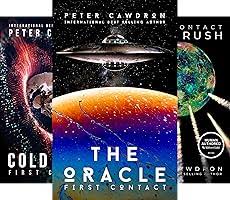
First Contact, a series by Peter Cawdron

The purpose of this essay is to draw attention to a creative and prolific author resident of Queensland.  It was thanks to Amazon’s Mechanical Turk that I became aware of him and his works, but I am glad I did.  Here’s hoping some others might discover him by reading this brief.  

Rather than comment separately on each of the titles in this remarkable series, it seemed best, and easiest for me, to present them as a whole accompanied by some general remarks to orient readers and remind me of what I have read. (Though I reserve the option of later reviewing an individual title or ten.) Impressive as the list is since 2011, for example, six full length novels appearing in 2025 alone, it  is not the complete list of his publications. There are other genre novels apart from these. The total runs to at least forty (40)! It is best to read the list sitting down, least one grow faint. At this time there are thirty-three titles in the First Contact series, nearly all run to about 200 pages. Both this series and my reading are continuing. 

The series is unified by its theme, namely First Contact between Earthlings and Aliens, a tried and true motif in science fiction since Murray Leinster’s eponymous story in 1945, though I suppose H G Wells’s War of the Worlds (1898) is an earlier  example.  Each story is self-contained and there are no continuing characters or other continuities. It is a one-man anthology on its theme.  Consider a comparison to a version of The Twilight Zone or Black Mirror  in which each episode concerns First Contact.  Each episode is distinct but all are written by the same author, yet there is no overlap of character, milieu, or circumstances in any of stories. Whew! What a feat of imagination!  I know I have said that twice but it needs to be emphasised. 

There are period pieces, set in ancient Greece, Renaissance England, and 1950s American suburbia. (None, in my ken, is set on the Sunshine Coast near the author.)  Others occur in low Earth orbit or the distant and largely theoretical Oort Cloud and beyond.  Sometimes the initiative is human, and sometimes not. The contact is an invasion at times, initiated by aliens or by Earthlings.  At other times the contact is one-sided, not mutual. Some contacts are inert, but most are dynamic.  

In every case the level of verisimilitude is high. The most impressive aspect of that is the ease with which, and no doubt it was not easy, Cawdron animates an American Congressional intern in one book, and a high school girl working at a fast food outlet in the next, an aging archeologist in German occupied Greece, a motivated Soviet astronaut doing the Cold War, an Elon Musk clone raiding employee pension funds, an early Renaissance witch-hunter looking for another victim, a general of the People’s Liberation Army who follows the Tao of Sun Tzu, innumerable scientists and several flygirls, and more than a few innocent bystanders swept up by events. Each has a distinctive voice and persona even if the appearance is but a cameo. 

The Aliens from his mental zoo also take a variety of forms. Some are unseen, others are ectoplasm, some are grotesqueries, others humanoid.  Often they are silent observers. In other novels the Aliens are represented by technology. On the occasions when the Aliens communicate, they have a tendency to lecture about our faults, though they are not nearly as preachy as so many ostensible science fiction stories are these days. Often they do not communicate.    

In each case Cawdron digs into the context with a mass of details that provide a rich context whether it is the technology of deep space exploration, surviving in the wild hinterlands of the Sudanese desert, or watching a take-no-prisoners Congressional hearings in D.C.  He displays an impressive amount of research for each tale and integrates it smoothly into the stories. That said, it is also true, especially in the earlier titles one character explains to another all the details generated by that research. TMI.  

On the other hand, there are many finely judged insights.  Here is an example. It is a commonality in science fiction that we Earthlings want and would benefit from advanced alien technology. Would we? Could we? Imagine a Stone Age man getting an iPhone. It is advanced, alien technology to be sure, but what is this man to do with it. Throw it at prey? Ditto this same alien giving an Surface tablet to Cicero. What would he do with it?  Sit on for warmth while the battery lasted?  

A few of the book are homages .  The most obvious are pastiches of Shakespeare’s The Tempest as mediated by the film The Forbidden Planet (1956) and its Krell.  These are, you guessed it, The Tempest and Little Green Men.  All in all it would seem Cawdron is a reader as well as a writer, and one well-steeped in the science fiction library.  

The ones I read during our month on the Gold Coast are shown in blue below. I particularly liked the three shown in bold bluebelow, but overall I must have liked them all because, as with Oliver Twist, I wanted more. And there are more for the reading!  My work is not yet done.  The table below indicates the scale of Caldron’s project. The varied settings, as indicated above, show the scope.  

TitleTitle
Anomaly (2011) Cold Eye (2021)
Xenophobia (2013)Generation of Vipers (2022)
Little Green Men (2013)Clowns (2022)
Feedback (2014) Tempest (2022) 
My Sweet Satan (2014) Apothecary (2023) 
Galactic Exploration (2016) The Art of War (2023) 
Starship Mine (2016) Ghosts (2023)
Welcome to the Occupied States of America (2016) The Artifact (2023) 
Nosferatu (2017) The Anatomy of Courage (2024)
Maelstrom (2017) The Simulacrum (2024) 
Losing Mars (2018)Love, Sex and the Alien Apocalypse (2024) 
3zekial (2019)Entropy (2025) 
But the Stars (2020) The Minotaur (2025)
Wherever Seeds May Fall (2021) Dark Beauty (2025)
Déjà Vu (2021) Gold Rush (2025)
Jury Duty (2021) The Darkness between the Stars (2025) 

P.S. Those that bored me, I skipped many pages.

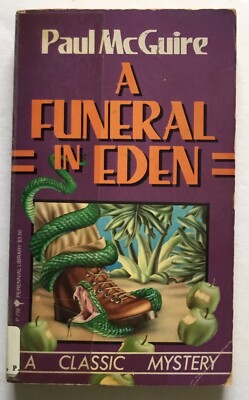
Paul McGuire, A Funeral in Eden (1938)

On a forgotten island somewhere in Oceania handful of European ex-pats wile away the time among several thousand natives.  By a quirk of history, a Brit owns the island, being the third in line of succession since the islet was granted to his grandfather.  He reports annually to a consulate miles away.  

While the natives go about their own business except for a select few who act as servants for them the ex-pats pass the time in hobbies like painting, drinking alcohol, and making witty conversation.  There is too much of the latter for this reader.  


nto this edenic life blunders an outsider, whose lugger pulls into the bay, causing curiosity, consternation, and irritation to the residents.  Who is it that would intrude on their retreat?  It turns out to be a blustery know-it-all who upsets one and all.  


We hardened krimi readers know he is for the chop and he is, but it takes a long time in coming.


Now the question is who done it?  And why dun it?  And does it matter since the victim was a such scumbag?


Was it the Lord and Master of the islet himself who would do a great deal to seal the island off from the outside world?


The windy, self-professed one-time sea captain who never went to sea?


The quartermaster who works for the Lord and Master, and whose background may not bear inspection?


The retired Scotland Yard detersive who came there to forget his own troubled past?

The retiring spinister who never answers a question about herself?

The doctor who seems wasted in this wasteland, but may be there for want of a better bolthole?

There are two or three more with similar questions handing over them.

Until the death of blowhard, Lord and Master was content not to ask any of them questions, but the death opened all quesitons, the most so when it appears to have been murder.  Murder!

what follows is a puzzle of who was where when, and what motive might have led to the murder.  At first this quest is pursued almost like a board game of Clue, but then…  Yes, inevitably there is a second murder, and with the European population diminishing activity is increased.  

Those deans of krimi-lit, Jacques Barzun and Wendelll Taylor describe is as a ‘masterpiece,’ and in a their very brief comment say it is ‘atmospheric,’ ‘entertaining,’ and ‘brilliant.’  This is high praise from these two.    

The ten Good Riders who scored it at 3.20 are closer to my take on it. Several of these souls were led to it, as was I, by Barzun and Taylor.  

I found the witty conversation tedious and the epistolary exposition at the denouncement artificial.  Nor could this savant distinguish among the ex-pat characters very well. They blurred together to me.  I needed a scorecard to separate them.  

Paul McGuire may have beeb an Australian diplomat who worked in Oceania. According to the Australian Dictionary of Biography there was a Dominic Mary Paul McGuire (1903-1978) who has a long entry and several publications are mentioned but not this one.  I am not sure it is the same man, but if someone knows, contact me.